The Most Important Things at Manam Chocolate Aren’t Made of Chocolate

Beautiful brands are built on boring systems. Manam Chocolate’s real achievement isn't simply making Indian craft chocolate desirable. It's building the agricultural, operational, human and narrative infrastructure that allows it to exist at scale.
Not long ago, Chaitanya Muppala arrived at the Manam Chocolate office before anybody else and started going through his employees' rooms.
“Yes, I know it sounds a little voyeuristic,” he admits. “But I wasn't looking at desks or screens. I was looking at the walls. And what those walls said.”
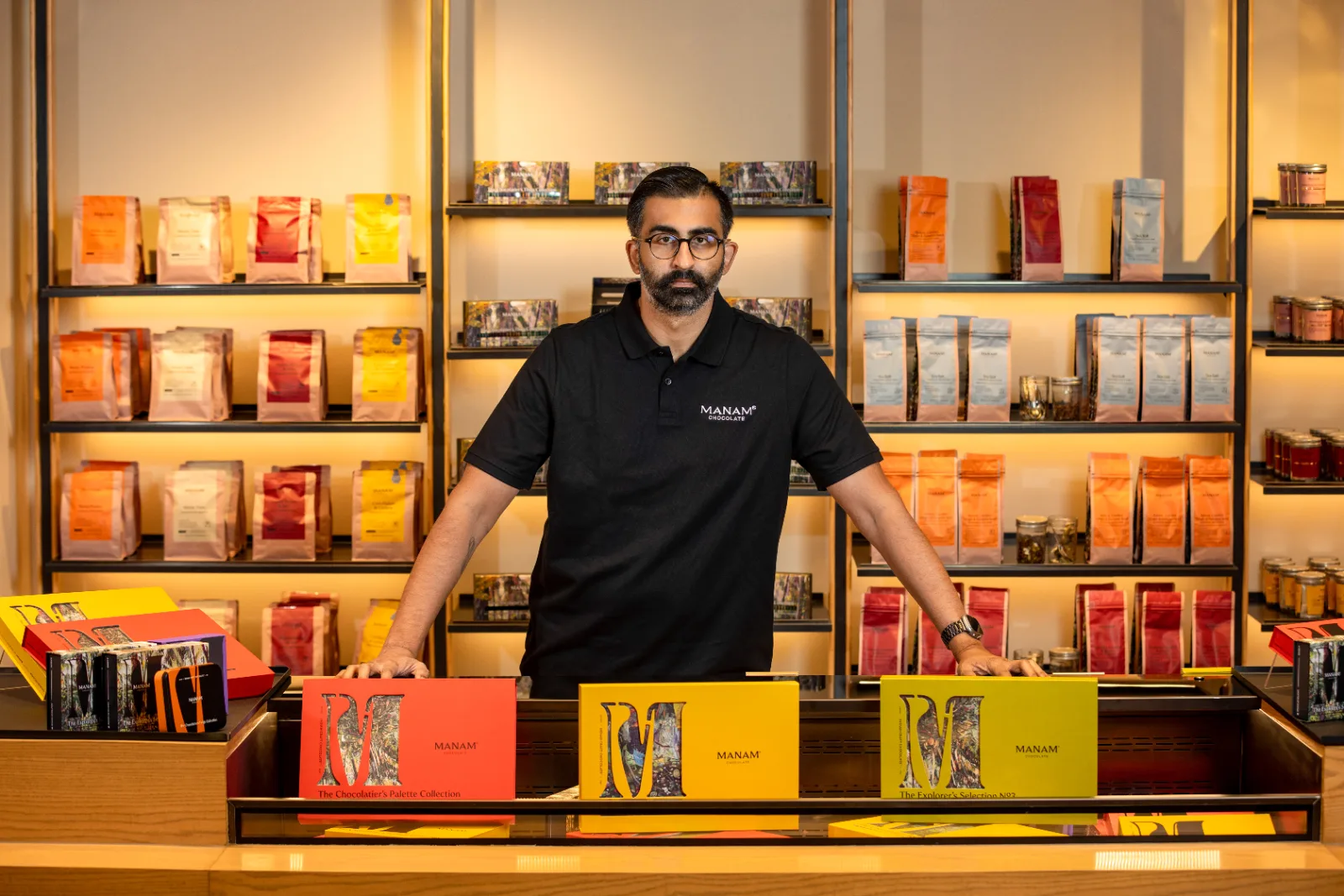
Enterprise resource planning. Inventory management. Resource allocation charts. Cabin after cabin of the least photogenic material in the building, taped up by people who spend their days solving problems no customer will ever know existed. He took pictures of all of it, because it struck him, standing there in the empty office, that this was the part of the company nobody has ever asked him about.
“People, when they think about the outcome, think about the romantic things,” he says. “You don't think about the boring bricks that make this wall, and the pain it takes to put them together.”
The least romantic conversation in craft chocolate
A day or two after, the leadership team sat in a room and had what he describes as a heated discussion. “The discussion was about HR policies,” he says. “Very banal, boring things like leave policy. What sort of stand we want to take as a value system, as a company, amongst us, as a leader.”
Then he says the line that reframes everything written about Manam Chocolate in the last three years.
“Nobody ever thinks about what it takes to build an enterprise.”
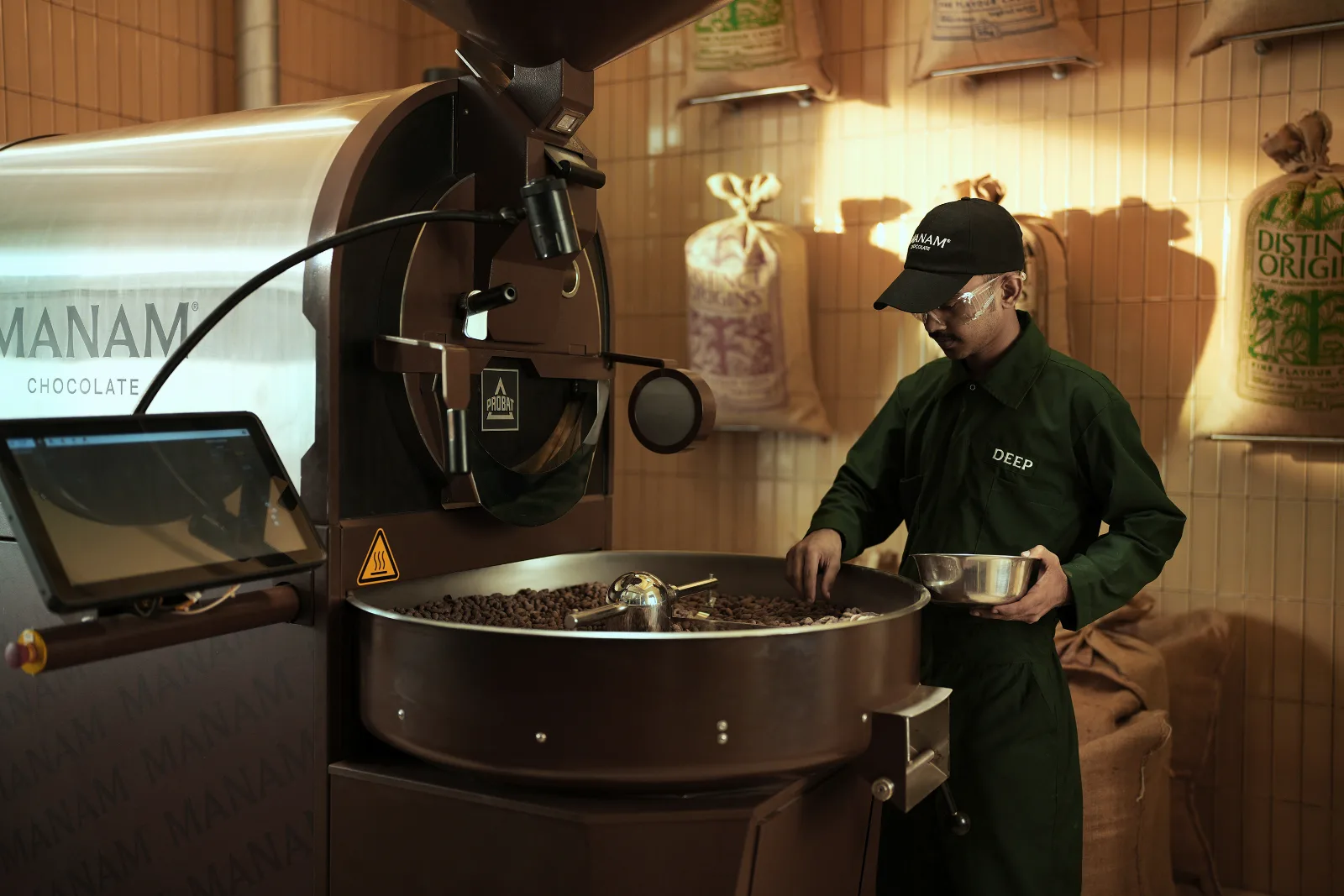
He is right, and the evidence is easy to find. The brand has been covered relentlessly since it launched in August 2023. There is the TIME listing, the awards, the 10,000 square foot Karkhana in Banjara Hills where chocolate-making happens behind glass. There are the travel pieces that open with a drive through West Godavari and a cacao pod cracked open in the light. There are the Willy Wonka comparisons, which have been made so many times that they have stopped meaning anything at all.
What almost nobody writes about is the operational complexity of launching a company with three hundred products across fifty categories on Day 1. The romance is downstream of all of it.
They buy fruit, not beans
The technical decision that separates Manam Chocolate from nearly everyone else in Indian chocolate is unglamorous enough that it gets skipped in most coverage.
Cacao farmers around the world sell dry beans. They are expected to do the fermentation themselves, and they do. But, as Chaitanya puts it, "the way they've been told and taught to do the fermentation is a very crude process that gives you a commodity or mass market bean." That bean goes on to have its fat extracted, or gets alkalised into cocoa solids destined for cheap chocolate, or for compound, which he points out isn't technically chocolate at all.
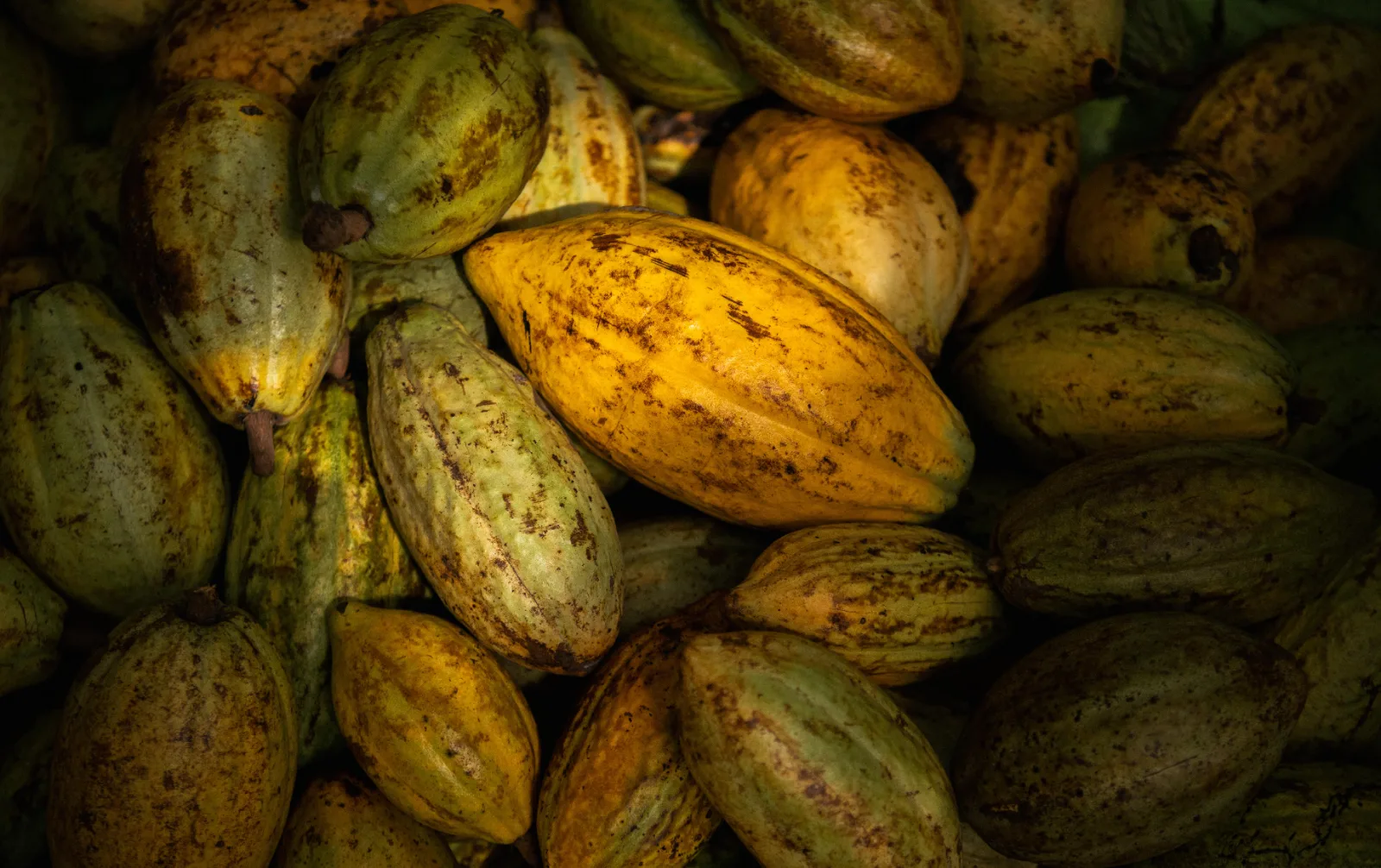
Flavour in chocolate is made overwhelmingly during fermentation. Which means that a maker who buys dried beans, however skilled, is inheriting decisions somebody else already made.
Manam Chocolate buys fruit. Everything after that happens in-house, at the Distinct Origins fermentery in Tadikalapudi, West Godavari, on their own protocols. It is the reason a Manam Chocolate bar tastes the way it does, and it is also the reason the company had to build an agricultural business before it could build a chocolate brand.
“We will never be a major cacao growing country,” he says. He is careful about where this can go. Globally, he estimates fine-flavour cacao at somewhere around 20,000 metric tonnes against a total world output of roughly five million. India grows about 30,000 tonnes of cocoa a year and consumes far more, the gap filled by imports. There is no version of the future in which India becomes a volume player.
“But if we are able to affect enough change and do enough volume, perhaps we can be known as the premium cacao grown country. And as a company, we'd like to lead that.”
Sensors everywhere, decisions by mouth
Manam Chocolate’s fermentation bins are wired. Every lot is logged: pH, sugar, temperature, tracked through the cycle. Ask him for the batch the data saved, or the one it killed, and he politely takes the question apart.
“The data is more about process salience,” he says. “So that we know we're getting a technically sound outcome, or that we're following a set of parameters that indicate what we want to happen enzymatically or microbiologically. That's why we use data. But finally, all decisions that we make, we make on flavour.”
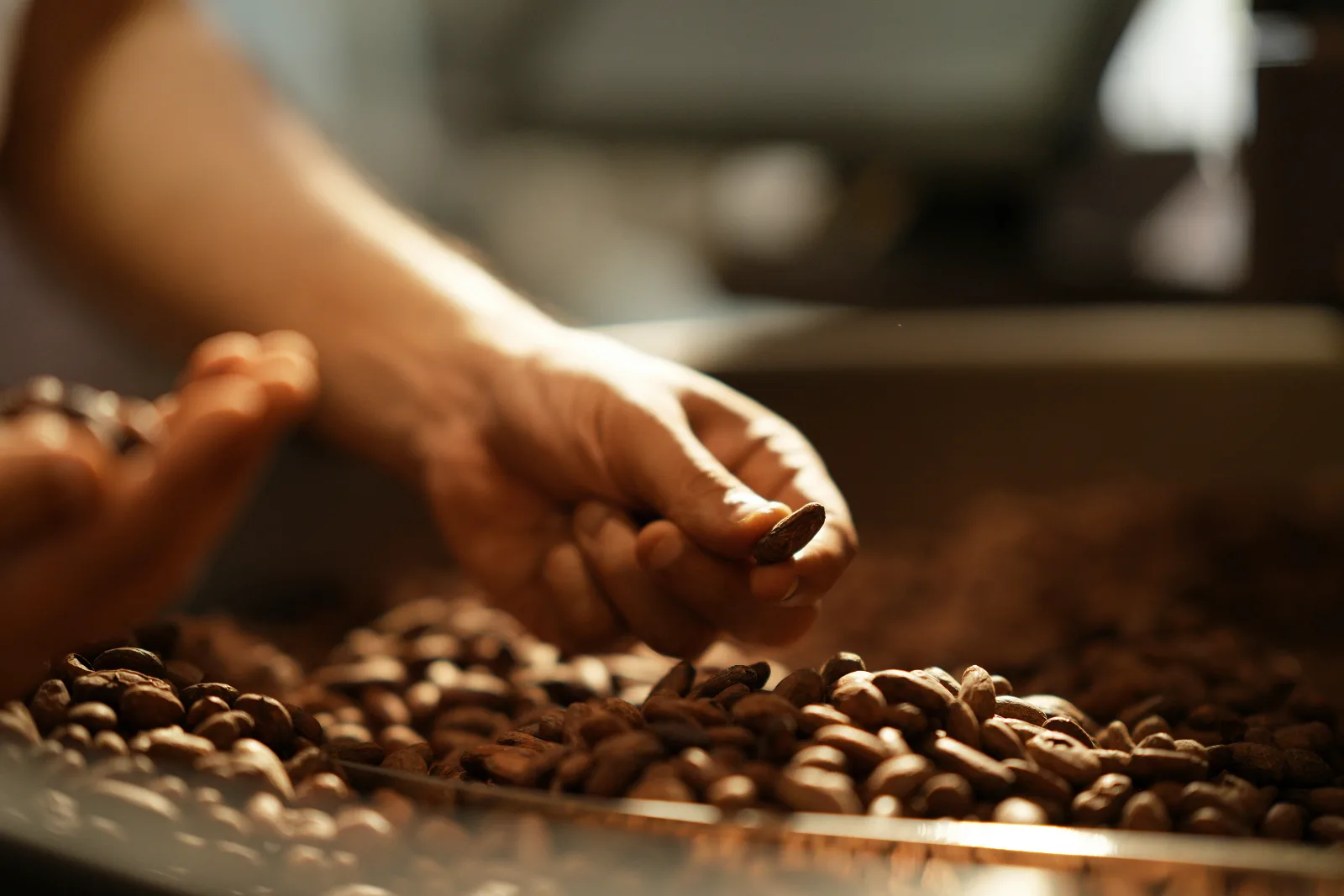
The order is the point. Somebody tastes. The verdict then gets traced backwards into the numbers for that specific lot, and the dots get connected: maybe because of this, we are getting this. Then the next batch gets adjusted.
There is no single heroic intervention to point to, which is why the question puzzled him slightly. “It's every day,” he says. “We make these micro decisions on each of these lots.”
To make that work, the company has built an unusual internal culture around tasting. Thirty to thirty-five people at Manam Chocolate are certified in chocolate tasting at various levels, and they are not all product people. Finance. Creative. Everyone who joins gets certified eventually. He believes it makes them among the most certified companies in the world at this, and he is quick to say his is nowhere near the best palate in his own building.
The occupational hazard is permanent. “Once you see something, you cannot unsee it,” he says. He can taste the emulsifier in a supermarket ice cream now. But he refuses to be precious about it. He describes ordering an industrial ice cream wafer off a quick commerce app recently and admiring, sincerely, the form factor: the way you can hold it in your fingers, its logic as a snack.
Of the people who analyse every mouthful, he is gently dismissive. “I would imagine their life is very difficult, because everything is substandard.”
Three farmers, then three hundred
None of the technology solved the actual problem, which was persuading farmers to hand over the most valuable step in their process to a company that did not exist yet.
That took years, and Chaitanya is unromantic about why.
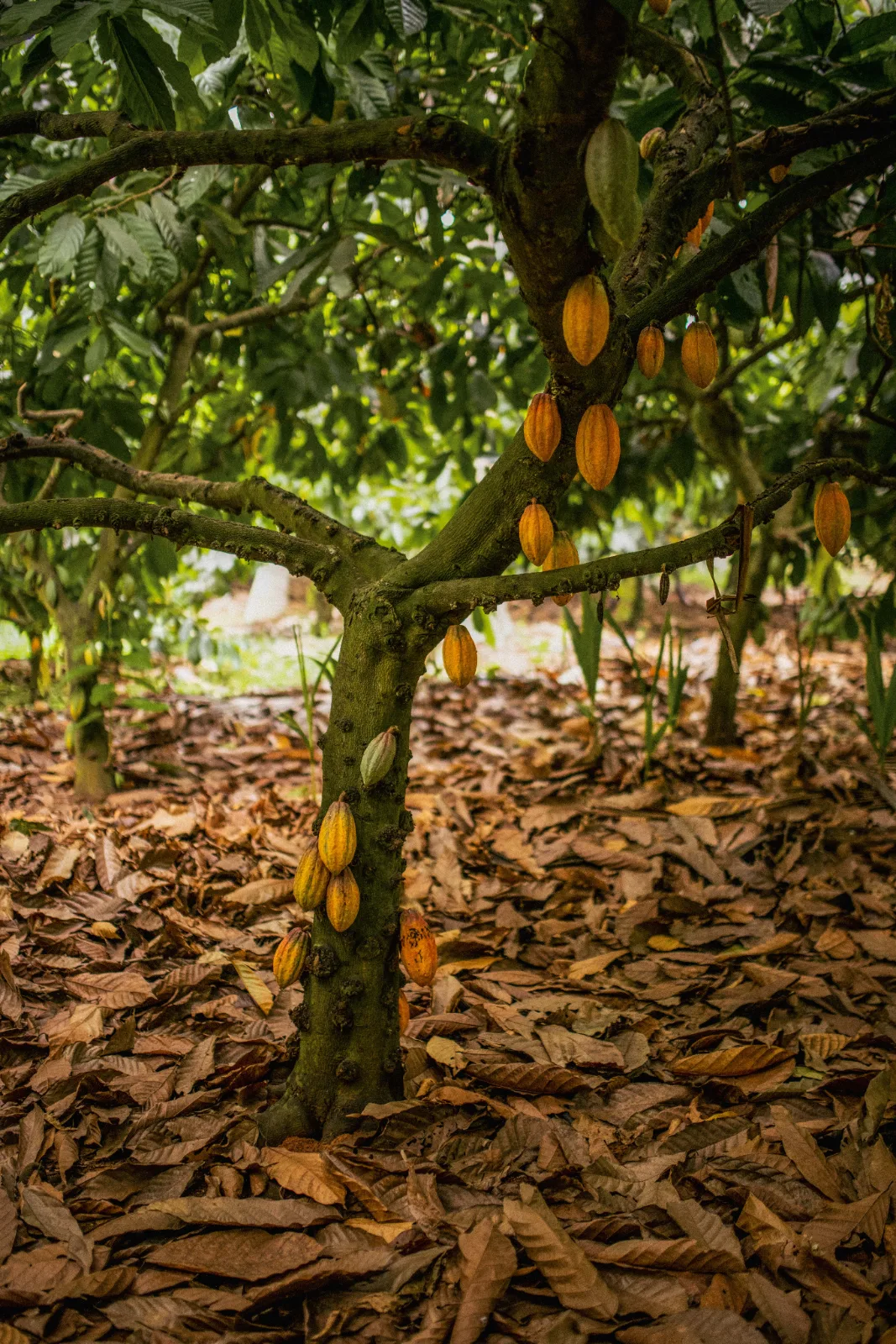
“Intention is meaningless without action,” he says, half-remembering a line he had read somewhere. “And action takes time. You can come and display an intention, but that's not going to be the reason to believe. Action is the reason to believe.”
They began with three farmers. In year four, they work with three hundred, and the base has doubled every year. Remarkably, none of it runs on paper. “We don't contract our farmers,” he says. What holds it together is the incentive structure and the relationships, which he names outright as the core asset of the entire agricultural operation.
The first two or three years were friction, but now, it compounds without him. Farmers tell other farmers. “It's self-fulfilling.”
Roughly 95 percent of Manam Chocolate’s lots are single-farmer lots by default, traceable to one farm, because that is simply how the fermentery is organised. The Single Farmer Series, the bars that carry a grower's name, is not a better deal for those farmers; every farmer receives the same benefits. It is a selection made on flavour alone, the lots complex enough to be worth isolating and putting a spotlight on.
And then there is a detail that says more about the company than any policy document. Every Manam Chocolate store, in Hyderabad and in Delhi, has been inaugurated by their farmers. They travel in for the opening and spend the day in the shop, watching what became of the fruit they grew.
The single-farm growers, he says, always want to carry their own bars home. To show the village.
“Remains work unless the storyteller tells it”
Printed in every Manam Chocolate store and on every piece of packaging is a manifesto: We are farmers, fermenters, chocolate makers, chocolatiers and storytellers.
Why storytellers though?
“That's more for those of us who are less useful in the system, to feel useful.”
His second answer is serious, and it is the most honest thing a founder in this category has said out loud.
“The work that the farmer does, the work that the fermenter does, the chocolate maker and the chocolatier does, remains work unless the storyteller tells it.”
He arrives at this commercially rather than sentimentally.
Manam Chocolate launched on August 15, 2023 with a price point that needed defending. Somebody would pick up a bar, see the number, and think of the Swiss chocolate a cousin had carried back from Europe. The story is what builds the texture around that number, and he uses the word scaffolding to describe it, structurally.
They launched with three hundred products across fifty categories, which is an operationally punishing way to begin. Bean-to-bar in India had been a small-batch, artisanal pursuit, and he came at it from a manufacturing and gifting background, having run the family's Almond House business.
“We're not bean to bar, we're beyond the bar,” he says. And then, on the assumption that craft has to stay small: “Why can't craft have scale? Does small batch mean fewer batches, or can there be small but many batches?”
The things nobody will ever taste
There is a short list of rules at Manam Chocolate that no customer will ever detect, and which cost the company a great deal to keep.
Nothing derived from cacao is bought in. Not the cocoa butter, not the powder, not the auxiliary ingredients that every other confectioner on earth simply orders by the sack. If it comes from the fruit, Manam Chocolate makes it. There are no hydrogenated fats anywhere in the range.
None of this shows up on a wrapper. A customer holding a INR 495 bar has no way of knowing whether the cocoa butter in it was pressed in Hyderabad or bought from a European supplier, and would not taste the difference in any single bite. The rule exists because of what it does across three hundred products, and because of what a company becomes when it is allowed to buy the difficult parts.

It also explains the shape of the catalogue. Chaitanya's argument about chocolate in India is that the bar is the least of it. Somebody buys a bar, eats it, perhaps gives a few as gifts. Then what. The behaviour that actually runs through Indian life is the giving and sharing of sweet things: the Diwali box, the Rakhi gift, the dessert at the end of a meal, the ice cream. That is the space mithai has occupied for centuries, and it is the space he built Manam Chocolate to occupy, without collapsing into the obvious gimmick of chocolate paan and chocolate rasgulla. Walk into a store and the collections are laid out in exactly that logic: indulgence, snacking, gifting, patisserie.
Ask him what one thing, if removed, would stop Manam Chocolate from feeling like Manam Chocolate, and he does not say the fermentery.
“People.” He talks about the six or seven leaders running the company, who were, he noted, out doing the more serious work while he sat answering questions. He talks about the person producing P&L and cash flow statements, and insists this is a craft in its own right, an art form somebody expresses themselves through.
When they launched, they counted everyone who had worked on the project across the five years before a single bar went on sale.
Three hundred people before day one.
What India didn't know about its own trees
Ask what has been misunderstood about Indian cacao and he answers the question sitting underneath it, which is why anybody is asking now at all.
“That's because we make a lot of noise around it, and it didn't really exist before that.”
Two reactions floored the team at launch. The first was that Indians did not know cacao grows in India. That has shifted, and he counts it as one of the company's real contributions.
The second is more fundamental and largely unchanged. Most people do not know chocolate comes from a fruit. They know, vaguely, that there is a bean involved. They have coffee mixed in there somewhere. They have never seen a pod, or the white pulp inside it, or tasted the sweet-sour flesh around the seeds. He draws the parallel to coffee, which took ten or fifteen years in India before the public understood it as a berry with a life before the cup. Cacao, he thinks, is at the start of that same arc.
There was a third reaction, and it is the one that reveals the market he is building in. People assumed the idea had been copied from abroad. Not that it was a bad one, but more that it could not have started here.
Which is why his positioning is fussy in a way that sounds like semantics until you sit with it.
“The positioning is chocolate from India,” he says. “Not Indian chocolate.”

Chocolate from Switzerland. Chocolate from Belgium. Chocolate from India. He is clear-eyed that the world is not there yet, and equally clear that the qualifier gets dropped the day the category stops needing to explain itself.
He speaks about that day as a scheduled event rather than a hope, which tells you what he thinks he is actually building, not a chocolate company, but a category, of the kind that outlives whoever named it.
Categories are never built by the people who make the beautiful thing. They are built by whoever is still turning up years later to argue about leave policy, to sit with a farmer for a third season running, to press their own cocoa butter when nobody would have noticed either way. It is slow, invisible, deeply unphotogenic work.
Chaitanya Muppala has pictures of it anyway.
Edited by: Aakanksha Singh Devi

About the author
Shaili Contractor
She reads, constantly, about everything, in a way that makes her annoyingly good at spotting trends before they have names. Studied at Asian College of Journalism. Has spent 18 years turning messy briefs into brand stories people actually remember. She also spends her weekends on cleanup drives in her city because clarity matters everywhere, including the streets.
Stay in the loop
New pieces, when they're ready.
No newsletters. Just a note when something worth reading goes live.
Read this next
Steeped in Science: How Alt Carbon Made Darjeeling an Unlikely Climate Lab

Meet Theyn, The Brand Bringing South Indian Jewellery Out Of The Locker

Bangalore's Women-only Cab Service, Built By A Woman With A Hundred Rupees And No Plan B