Steeped in Science: How Alt Carbon Made Darjeeling an Unlikely Climate Lab
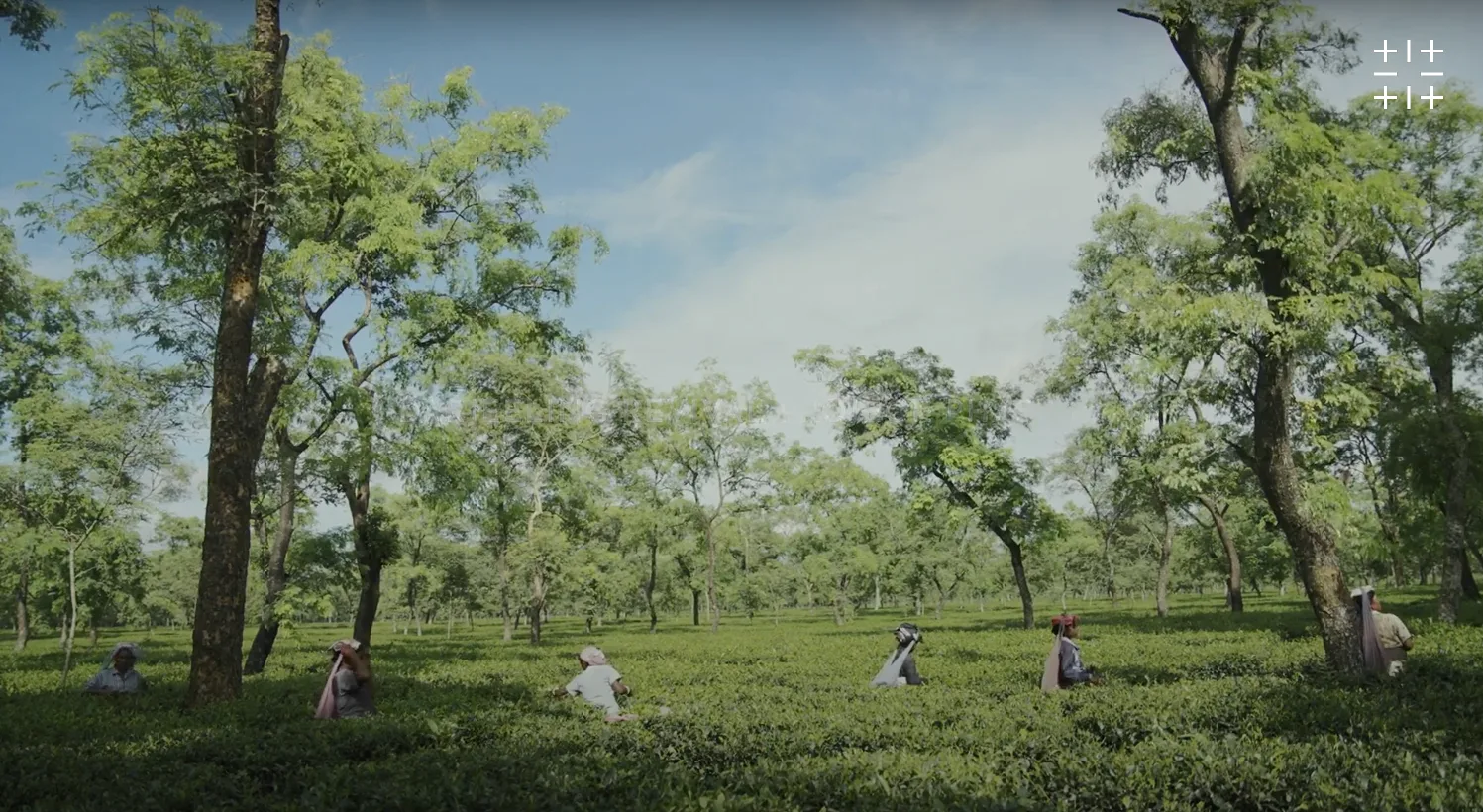
Shrey and Sparsh Agarwal's story begins in Darjeeling as fourth-generation tea planters who own the Selim Hill estate. Shrey studied Chemistry and Mechanical Engineering at BITS Pilani. Sparsh studied International Climate Law at Oxford. Life had other plans for them until May 2020, when in the midst of the pandemic, they had to fly back home and drive 16 hours from Kolkata to Darjeeling to make a harsh choice.
Their family tea estate was facing bankruptcy, and they were on their way to say goodbye. Except they didn’t. Instead of selling, the brothers began asking a different question: could the same land that had sustained tea for generations also become a frontier for climate science?
"It was not practical to run the tea estate as is," Shrey had mentioned in an interview, speaking of the brothers' moment of reckoning. "There was a point where we decided to sell it, but we went against that idea once we realised that this could be a frontier for climate action."
The brothers spent a week at the family estate, and in that week, something shifted. They had grown up on this land, and the community had known their family for generations. They had fancy degrees between them. Could those degrees be put to work here, of all places? They renamed the family home ‘Second Chance House’, launched a D2C tea brand called Dorje Teas to keep the estate afloat, and began experimenting with Enhanced Rock Weathering on their own soil.
And so, the Darjeeling Revival Project was born – an initiative to unite climate action with cultural and ecological restoration, by reviving degraded soils, restoring livelihoods, and preserving Darjeeling's most valued export: its tea.
To understand why the brothers stayed, you first need to understand what they stood to lose.
Darjeeling Tea is often called the Champagne of Teas. In 2004, it became the first Indian product to receive a Geographical Indication tag. For more than 180 years, 87 heritage tea estates scattered across the Eastern Himalayas have produced a tea so inseparable from its soil, altitude, rainfall, and mist that it has resisted imitation for generations.
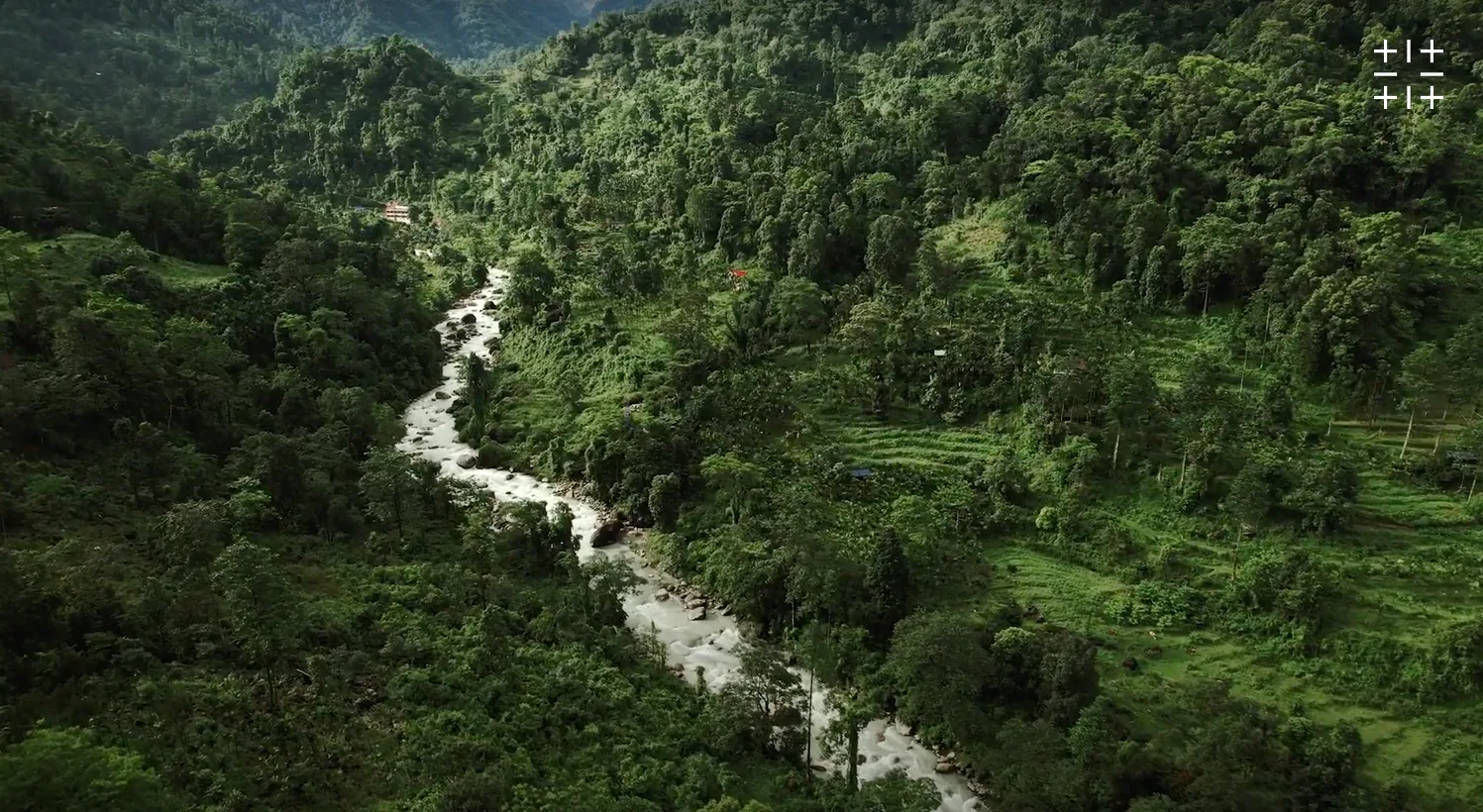
But the fizz began to fade.
In 1990, Darjeeling's gardens produced 14.49 million kilograms of tea. By 2024, that figure had fallen to just 5.69 million kilograms. Production dropped another 8.79 percent in the first eleven months of 2025, nearing lows last seen during the 104-day Gorkhaland shutdown of 2017. Around 80 to 90 percent of the region's tea bushes are now over 70 years old, many more than a century. Alongside ageing plantations, estate owners contend with rising costs, unpredictable weather, shrinking yields, and counterfeit tea from neighbouring Nepal entering global markets under the Darjeeling name. The livelihoods of roughly 55,000 permanent workers and their families depend on an industry that has been steadily losing ground.
This was the Darjeeling Shrey and Sparsh returned to in May 2020. Saving one tea estate would never be enough. The question became whether they could find a way to make the economics of preserving the landscape work again.
Their answer lay in a corner of climate science that, until recently, had remained largely inside academic journals: Enhanced Rock Weathering.
ERW: The science, simply put
To understand Earth's oldest natural processes and what happened next, we spoke with Adithya Venkatesan, Alt Carbon's Climate Studio (the team's internal brand vertical arm) Lead.
The Earth, over billions of years, has been quietly running its own carbon removal programme called 'weathering'. We all learned this in a geography class way back, but it's okay to forget.
So, here's the layman version:
Rain falls → absorbs CO₂ from the air → meets basalt on the soil → dissolves the rock → minerals flow through rivers to the ocean → locks carbon away as limestone.
What Alt Carbon does is simple. They speed this process up.
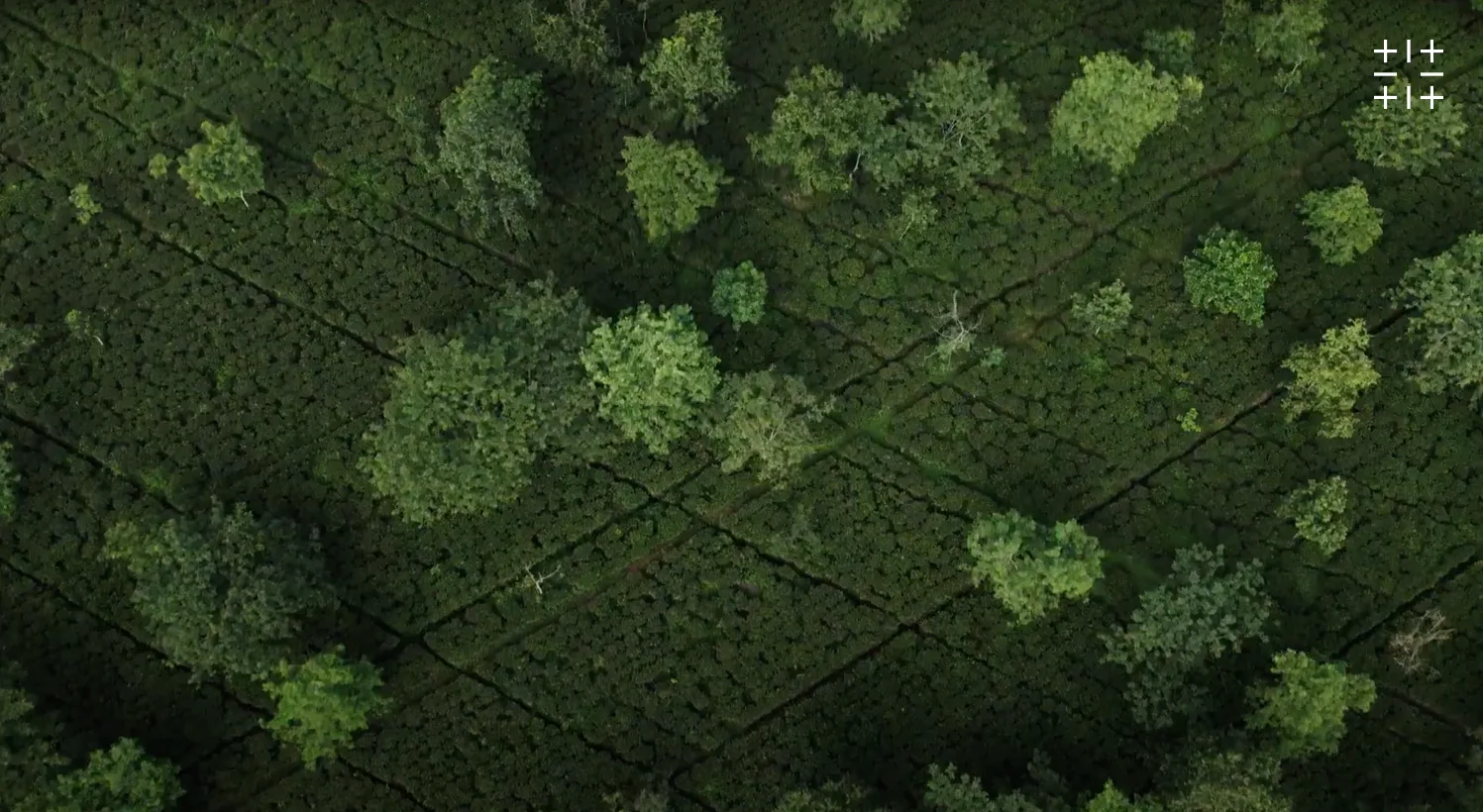
They source waste basalt from the Rajmahal Traps; a volcanic rock province in eastern India, where basalt sits in mining waste. They crush it, blend it with silicate amendments specific to the soil chemistry of individual land pockets, to form 'Hari Maati' or green soil, which is then spread on agricultural fields.
"No two pieces of land in India are similar. Every three to six acres, land pockets change, crop types change, slopes, pH, moisture levels change. What we deploy depends entirely on what the land tells us," we were told.
That calculation is done with the help of the operations team, named Indra Dhanush, after the God of Rain, who deploy ‘sepoys’ across estates and farms, collecting samples, testing water. These are on-ground specialists trained by scientists from the 15,000 square foot D-CAL (the Darjeeling Climate Action Lab) who document every step of the chain of custody that will eventually become a verified carbon credit.
A carbon credit is, at its simplest, a certificate that one tonne of CO₂ has been permanently removed from the atmosphere and stored. Global corporations buy these credits to offset emissions they haven't yet eliminated from their own operations. One credit is roughly equivalent to the emissions from burning 430 litres of petrol, or a return flight from Delhi to Singapore.
The buyer pays, and the money flows to the company doing the removal. And the credit is only worth anything if an independent verifier — in Alt Carbon's case, Isometric, can confirm the tonne was actually removed, and not just promised.
In May this year, Alt Carbon became the world’s largest ERW company by total verified issuance with 9,566 tonnes of verified CO₂removed, which is roughly equivalent to the annual emissions of a small AI data centre running 24/7. By 2030, the Darjeeling Revival Project aims to reach 500,000 hectares, removing upwards of 5 million tonnes of CO₂ every year. That is up from 60,000 acres of tea estates, rice paddies, and agricultural networks spanning 60+ gram panchayats currently. That is a whopping 2000% increase! The company has created 250+ green jobs in West Bengal with participating farmers reporting 30% increase in crop yield.
But when you claim carbon credits, proof is everything. Alt Carbon learned that the hard way. In its first year of operations, the company attempted a delivery and failed because its documentation wasn't rigorous enough.
That first failed delivery led to better equipment, more rigorous sample analysis, randomised samples sent to third-party labs, and an internal system for cross-verification. To do any of this at all, they had to build infrastructure that didn't exist. The D-CAL lab was created inside the family tea estate in October 2024, almost a year after the brand was formed. In November 2025, the team founded Shonku Labs — named after Satyajit Ray's beloved fictional scientist, inside the IISc campus in Bangalore.
Together, the two labs can process more than 100,000 samples a year. They analyse mineral concentrations in soil and water at parts-per-billion precision (the same level of accuracy used to analyse meteorites), and voluntarily send a portion of samples to independent laboratories for cross-validation, even though the protocol does not require it.
That scientific discipline is what earned them, in September 2024, a Frontier* pre-purchase — the first ever awarded to an Indian company, with buyers including Stripe, Google, Shopify, and Match Group. It is what brought Mitsui O.S.K. Lines (Japan's largest shipping company) into a multi-year offtake agreement. And in June 2026, it earned Alt Carbon a deal with Microsoft for 36,920 tonnes of CO₂ removal, Microsoft's first ever ERW purchase from Asia, signed just weeks after Bloomberg had reported the tech giant was pausing carbon removal purchases entirely.
Adithya keeps a printout of that failed delivery report at home. "We are only known by our last success," he tells us. "But our failures teach us so much more about how we got here."
First Flush: When science met the soil
The numbers are impressive. But they raise a far more difficult question: how do you convince farmers and estate owners to spread crushed basalt on land they've known for generations?
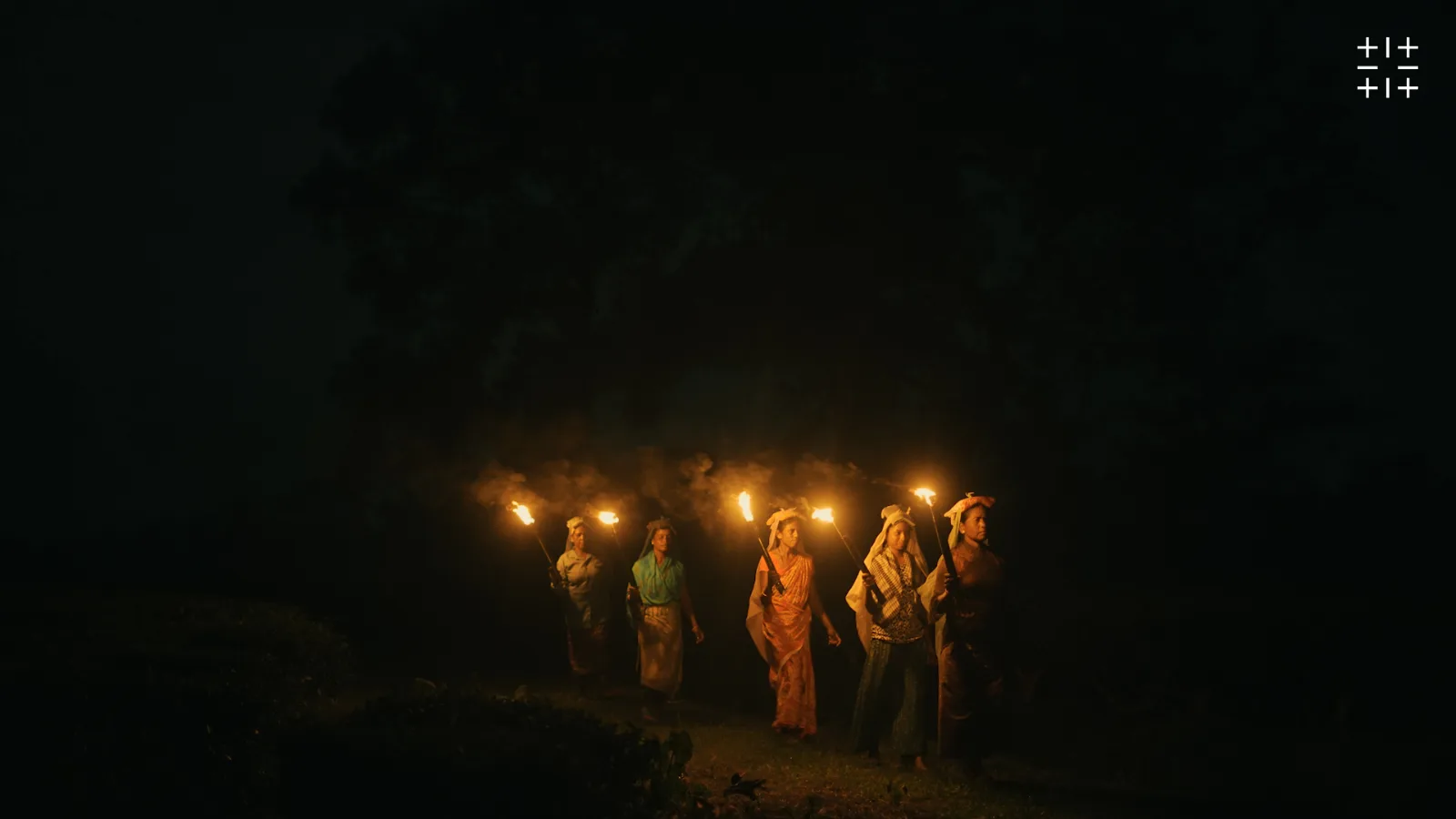
Estate owners, labour unions, pluckers, panchayat members, ward councillors, electricity boards, water boards – "there are thousands and thousands of stakeholders in this ecosystem," Adithya says. Each one has their own relationship with the land, and their own reasons to distrust outsiders promising change.
Shrey and Sparsh’s father originally didn’t even want to use this on their own family land. He questioned how putting concrete would improve crop yields.
"The moment you ask them to sign any piece of document," Adithya says, "farmers think you're siphoning off their land."
Alt Carbon's answer was the Vigyan Krishi Sabhas — open town halls held alongside women's self-help groups and local panchayats. The company brought soil analyses, documentation, charts of calcium and magnesium content, and laid it all out in language written for the hillside, not the laboratory.
But town halls could only reach so far. Alt Carbon also brought together large estate owners to create a forum where knowledge could flow in both directions. "It is not a one-way form of communication," Adithya explains. "Farmers can also share insights about their own practices: ancient knowledge about how tea has to be plucked, why certain crops shouldn't go in certain pockets of land, or how to rotate crops."
Two centuries of accumulated wisdom, meeting twenty-first century climate science.
"You can't go and convince a farmer that his father was wrong," Adithya says. "You'll have to figure out a way where you're trying to say: science is by your side."
To prove the science in a language farmers would understand, Alt Carbon set up control plots. Untreated land sat alongside plots where Hari Maati had been applied. Over time, the difference in yield became visible to everyone.
The work occasionally produced unexpected moments. In Darjeeling's border regions, sepoys collecting soil samples were once detained after border police mistook their soil corers - long metal instruments used to extract samples from the earth, for tunnel-digging equipment. The police concluded, reasonably if incorrectly, that they were attempting to dig their way out of the country.
Today, Adithya laughs, those same officers are among the company's strongest supporters. "They say you're doing God's work. Any help you need, you just let us know."
Alt Carbon struggled to onboard 20,000 acres in its first phase. “There was a point when there was a lot of push from us,” Adithya recalls. "But now it's a lot of pull. We get inbounds from farmers saying, can we get basalt for our lands as well?”
Someone from the Indra Dhanush team once told Adithya about a farmer who keeps a little mound of Hari Maati on his altar, beside his gods. Because when something makes your land grow again, how do you not worship it?
Brains behind the basalt
The scientists behind these wins are not accidental hires. Dr. Sambuddha Misra, Alt Carbon's Chief Scientist, holds a PhD from Cambridge and has spent two decades studying how the chemical weathering of continents shapes ocean chemistry. Dr. Sourav Ganguly, Mineralisation Lead, specialised in isotope geochemistry and chemical weathering during his postdoctoral research at the Weizmann Institute in Israel. Nearly half of Alt Carbon's 45-member team are scientists, many trained at IISc, working alongside local graduates from North Bengal and Sikkim.
But credentials alone don't explain why they joined.
Adithya tells the story of when Dr. Misra was collecting samples in the Sundarbans and Shrey, then just 23, offered to accompany him. It meant spending an entire day wading through salt marshes that are home to crocodiles, collecting samples. Exhausted, Shrey assumed the day was over.
Dr. Misra had other ideas. “There is no sleep for the clever.” The samples were tested through the night. By morning, Dr. Misra had decided this was a company worth joining.
“Never ask someone to do something you can't already do,” Adithya says. “That is fundamentally a core principle at Alt.”
There is also another principle that runs alongside it. The philosophy of abundance. The team at Alt Carbon believes that climate tech cannot be built on sacrifice. You can’t ask people to use paper straws to save the environment, because they are not fundamentally better than plastic ones. What you have to do, is out-innovate your way to a superior alternative. Alt Carbon is, in some sense, that better straw; built on the belief that the right response to a planetary crisis is not guilt, but ingenuity.
That ingenuity shows up in multiple ways. There's Atlas — a proprietary data platform building a high-resolution, longitudinal record of soil chemistry, groundwater dynamics, microclimatic conditions, and stream quality across Eastern India. There's Alter Magazine — a publication at the intersection of science, technology, and progress.
And there's Alt Futures — South Asia's leading CDR summit, where the agenda includes panels on carbon financing and Article 6 policy alongside a Darjeeling leg with a site visit, sunset trekking, and full moon tea plucking on the hillside. Locals bring their crafts to the event like the specific wild honey indigenous to that elevation, or momos that are only to be found in the valley. Crochet work. Tribal art forms.
“There is also a local beer,” Adithya laughs, “that I have been trying to get funded for a while.”
Beyond Darjeeling: The second flush
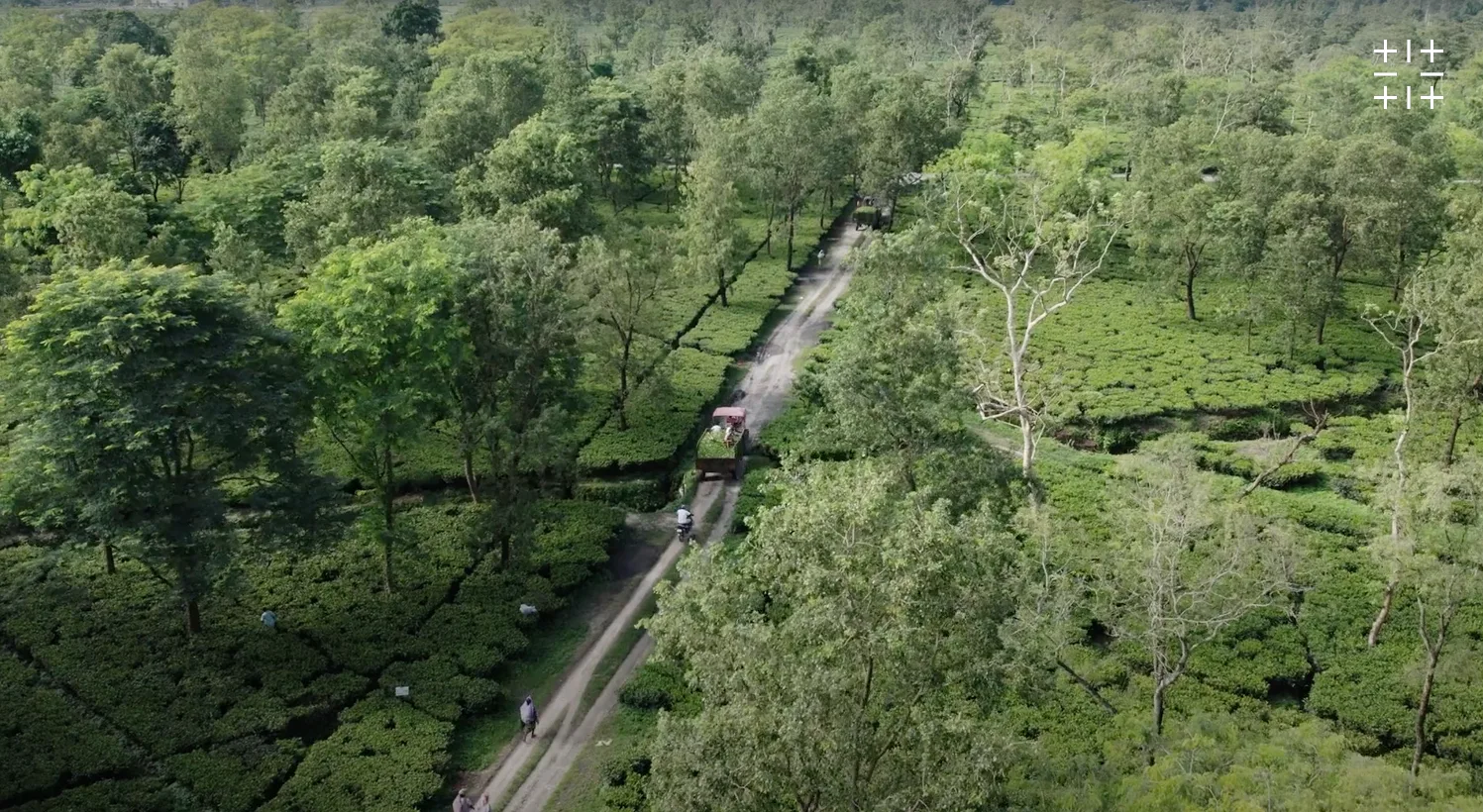
The Darjeeling Revival Project is not the end of the story, but a proof of concept. The next chapter is the Bengal Renaissance Project– a shift from Enhanced Rock Weathering to biochar, from tea estates to the rice and bamboo farms of Eastern India. Different technology, different crops, different communities. But the same underlying idea: take what the land already produces, intervene with science, and lock carbon away permanently.
Biochar works differently from ERW. Instead of spreading rock dust, Alt Carbon plans to collect agricultural waste – rice husks, bamboo offcuts and crop residue that farmers currently burn in open fields – and convert it through controlled pyrolysis into a stable carbon-rich charcoal. That charcoal goes back into the soil, where it remains for hundreds of years while improving fertility. The problem that was once pollution becomes part of the solution.
“The importance of accountability, documentation, creating very clear structures, clear chain of custody – all of it carries forward,” Adithya says. “When you are able to deal with enhanced rock weathering, everything else is fairly easy.”
Whether that confidence holds in a new geography, with new farmers, new regulators and a different verification framework, remains to be seen. Sparsh himself has said it will take another five to six years before they truly understand how far the technology can go. Adithya is equally measured.
“To say that Darjeeling is undergoing a complete revival is probably incorrect. It is pockets of land that have seen early results. Hopefully, there will be a universe in which everyone joins in. But that's yet to be determined.”
That honesty feels important.
For all the headlines about Microsoft, Frontier, and carbon credits, Darjeeling has not been transformed overnight. What exists today are early signs that science, when rooted in the realities of the people and places it hopes to serve, can begin to shift the trajectory of a region that has spent decades in decline.
Whether that promise ultimately scales remains an open question. "We stand for abundance," Adithya reminds us. "And that means being able to push the boundaries of science and technology. In India, we don't take enough bold, audacious bets."
But perhaps the more remarkable thing is that one of the world's most closely watched climate experiments isn't unfolding in Silicon Valley or a European research institute. It's unfolding on tea estates in Darjeeling.

About the author
Kumari Trishya
Trishya has been a writer and storyteller for 15 years; a career she began after failing her MBBS exams. She now believes it was her calling all along. She has spent those years embedded in some of India's most recognised startups, but what she really does — regardless of what her job title says — is find the one story a brand doesn't know it's sitting on, and echo it in a way that makes people feel something. She believes good content doesn't just inform. It changes minds, builds trust, and occasionally makes someone cry on a Tuesday afternoon. When she isn't telling other people's stories, she is working on her own as a closet poet, committed plant mom, and someone constitutionally incapable of walking past a dog without stopping to make friends.
Stay in the loop
New pieces, when they're ready.
No newsletters. Just a note when something worth reading goes live.
Read this next

The Most Important Things at Manam Chocolate Aren’t Made of Chocolate

Meet Theyn, The Brand Bringing South Indian Jewellery Out Of The Locker
Bangalore's Women-only Cab Service, Built By A Woman With A Hundred Rupees And No Plan B