Meet Theyn, The Brand Bringing South Indian Jewellery Out Of The Locker
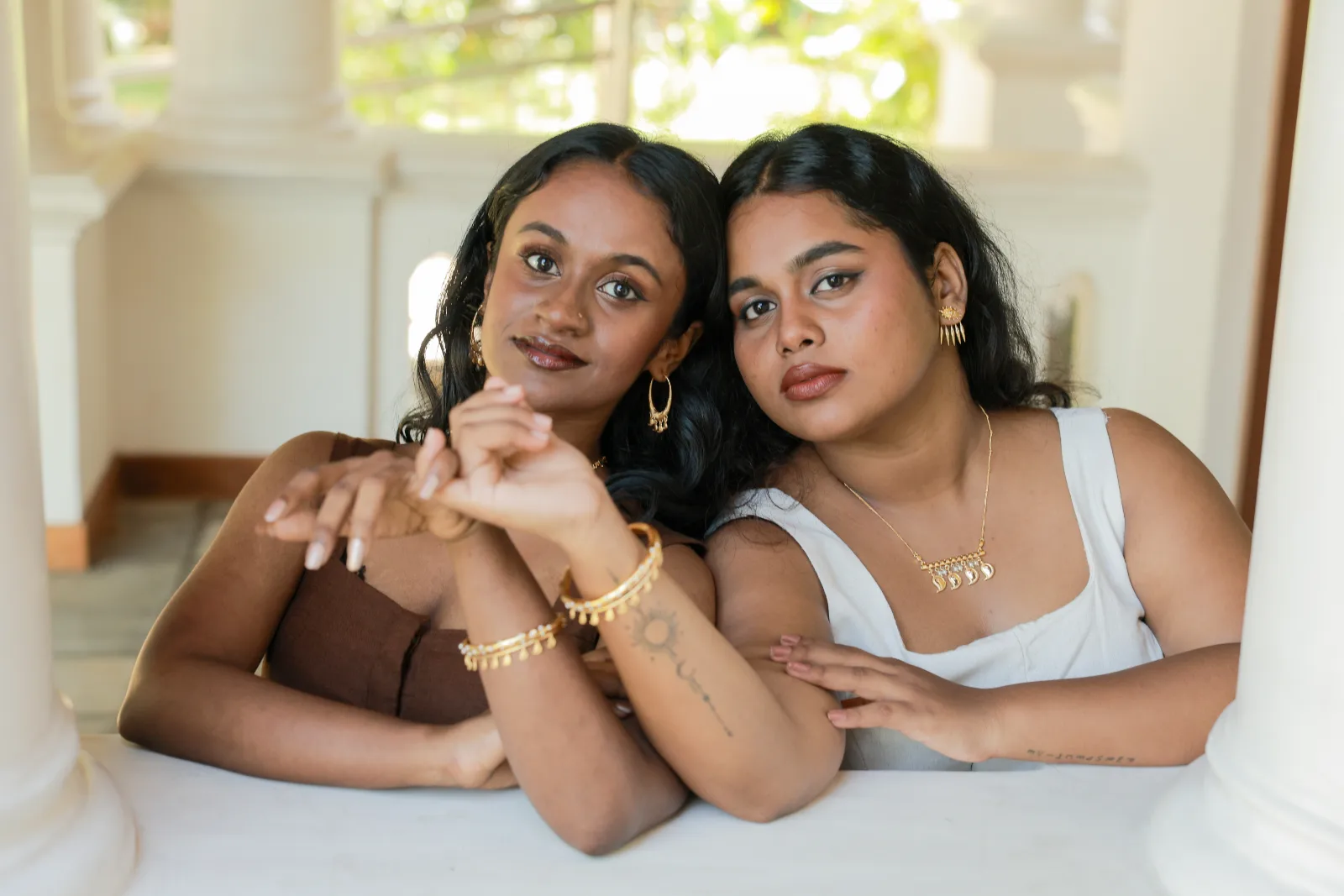
Ask four sisters from Trivandrum how to pronounce their brand name, and you will get, at minimum, a ten-minute conversation and possibly a presentation. Theyn, meaning honey in Tamizh and Malayalam, is the brainchild of Megha Girish, Mona Girish, Lakshmi Murali aka Meera, and Mithra Murali. It is an ode to childhood memory and the feminine love for jewellery, wrapped in modern design and oozing inclusivity.
Customers across the world have been cheerfully mispronouncing it since day one. The-yeen? Thane? Teen? All wrong, all forgiven, because the women who built it will tell you what Shakespeare already knew: a rose by any other name smells just as sweet. And Theyn, however you butcher it, is sweeter than most.
If you grew up in a South Indian home, you grew up around jewellery that was extraordinary but almost entirely unwearable. Heirloom pieces belong to weddings, to festivals, to the once-a-year moments when mothers would open the revered locker and don regalia. The rest of the year, those pieces sat quietly out of reach. The jewellery you actually wore was whatever didn't demand an event to justify it.
Theyn was built with the belief that the gap between ‘heritage’ jewellery and ‘everyday’ wear jewellery is worth closing, and that motifs and stories native to the southern part of India deserve their moment in the sun.
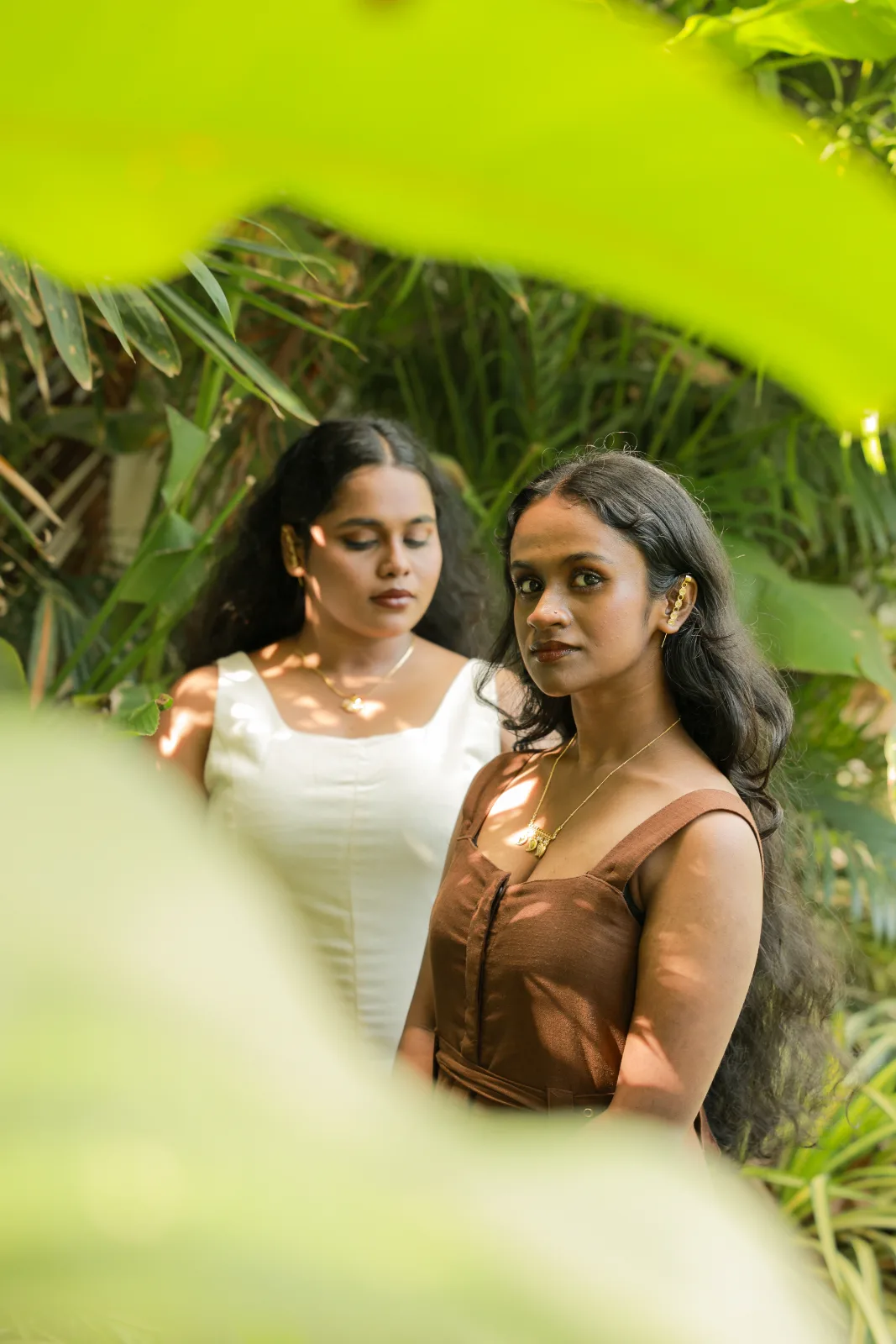
It's a larger opportunity than it might first appear. Research says India's jewellery market was valued at $94 billion in 2025 - one of the largest in the world. And the demand isn't staying within India's borders. IBEF, India's government trade and export body, tracked a 12% year-on-year jump in Indian fashion jewellery exports between June 2024 and May 2025, with the US, UAE, and UK as the leading destinations.
The world is already buying Indian jewellery; just not always the full picture of what Indian jewellery can be. Several brands have tried to serve the diaspora customer, largely through broad, pan-India catalogues built for volume and occasion wear. South India, with its own deeply distinct tradition; temple-inspired forms, motifs drawn from nature and mythology, a design language rooted in ritual, has largely been an afterthought. Theyn is changing that.
The sisters’ individual relationship with jewellery forms the brand’s core philosophy. Mona, who is blessed with sensitive skin, used to buy her jewellery from pharmacies. So, using hypoallergenic materials in their designs became a no-brainer. Megha had more or less stopped wearing jewellery entirely, so impressing her was the first test. Mithra, who wears everything eclectically, championed inclusivity and the design vision. And Meera, the most fashion-evolved among them, brought a sensibility that consistently elevated a piece beyond its traditional roots.
Between the four of them, they had every relationship their customers would have with their jewellery - every frustration, every love, and problem statement. And every reason to finally do something about it.
What surprised the sisters was how quickly they found alignment. "We came into this saying, let's be honest and see where everyone is," Mithra says. "Only to find out we were all more or less on the same page, or at least in the same chapter. I've seen the things my mom wears in photographs, but if I think about how I'd integrate that into my daily wear, there's really no way", Mithra says. " But the love for it was still there."
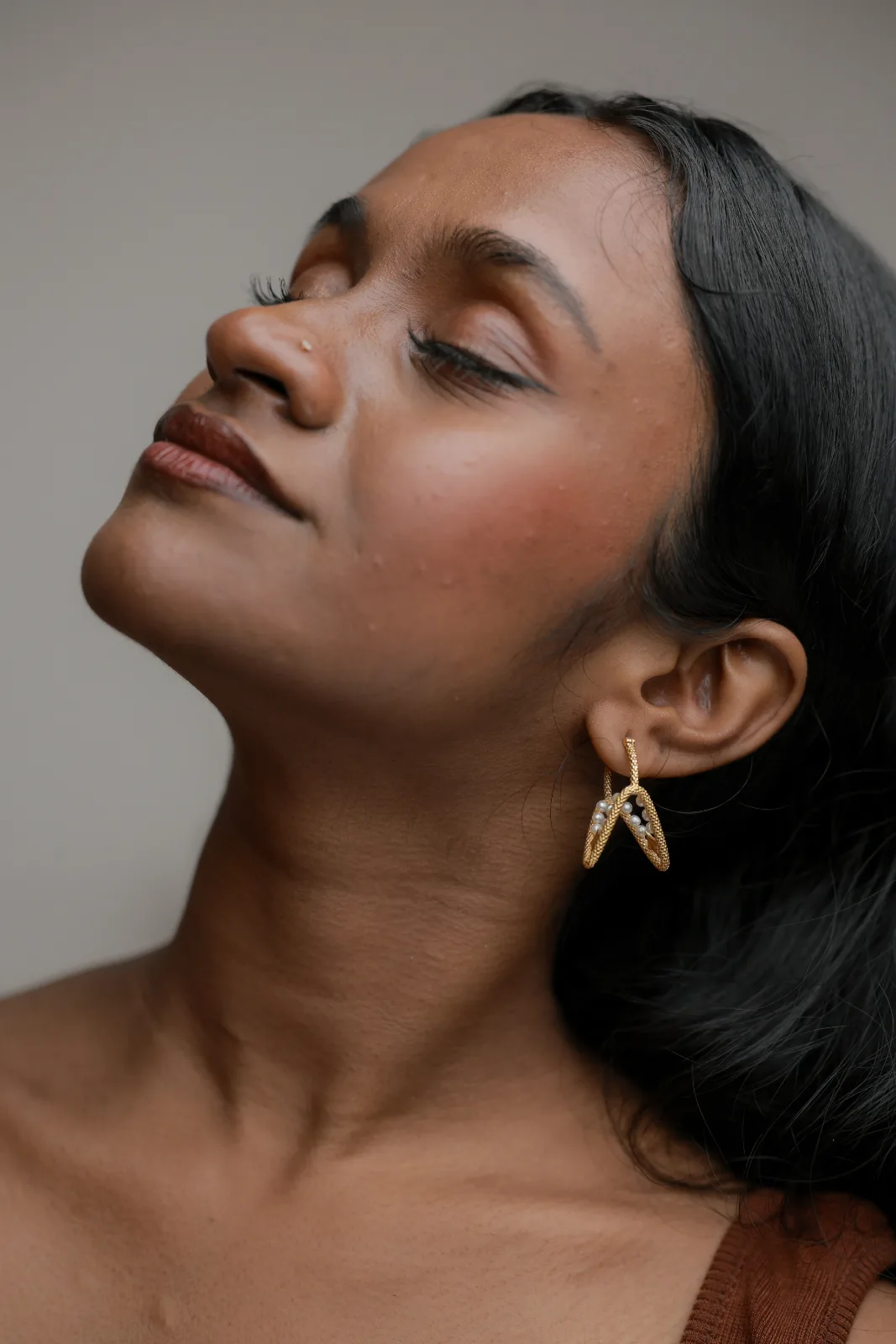
Now that they knew what they wanted to build, the next phase was finding a way to bring that vision to life. One afternoon they gathered at Mithra's family home, and her mother laid out a few pieces from her collection on the dining table. Mithra and Meera picked up each one and started reimagining — designing for the woman who loves what's in the locker but doesn't want the weight of safeguarding something whose sentimental value far outweighs its monetary worth.
"A lot of the time we were aiming to hit a motif," Mithra says. "And then you're designing, and you realise I'm designing this based on my mom actually. While I thought it was just about the palika motif, I'm very specifically designing it after my mom's palika necklace."
They drew and reimagined, taking forms that had been worn for generations; retaining the heritage, but making them feel lighter, breathable. Something that could sit at a collarbone on a workday, and not echo around the office.
What made it possible was the freedom of building something with no rules. "Not having to hold back; that was a very special thing we gave to each other without even knowing we were doing it”, Mithra adds.
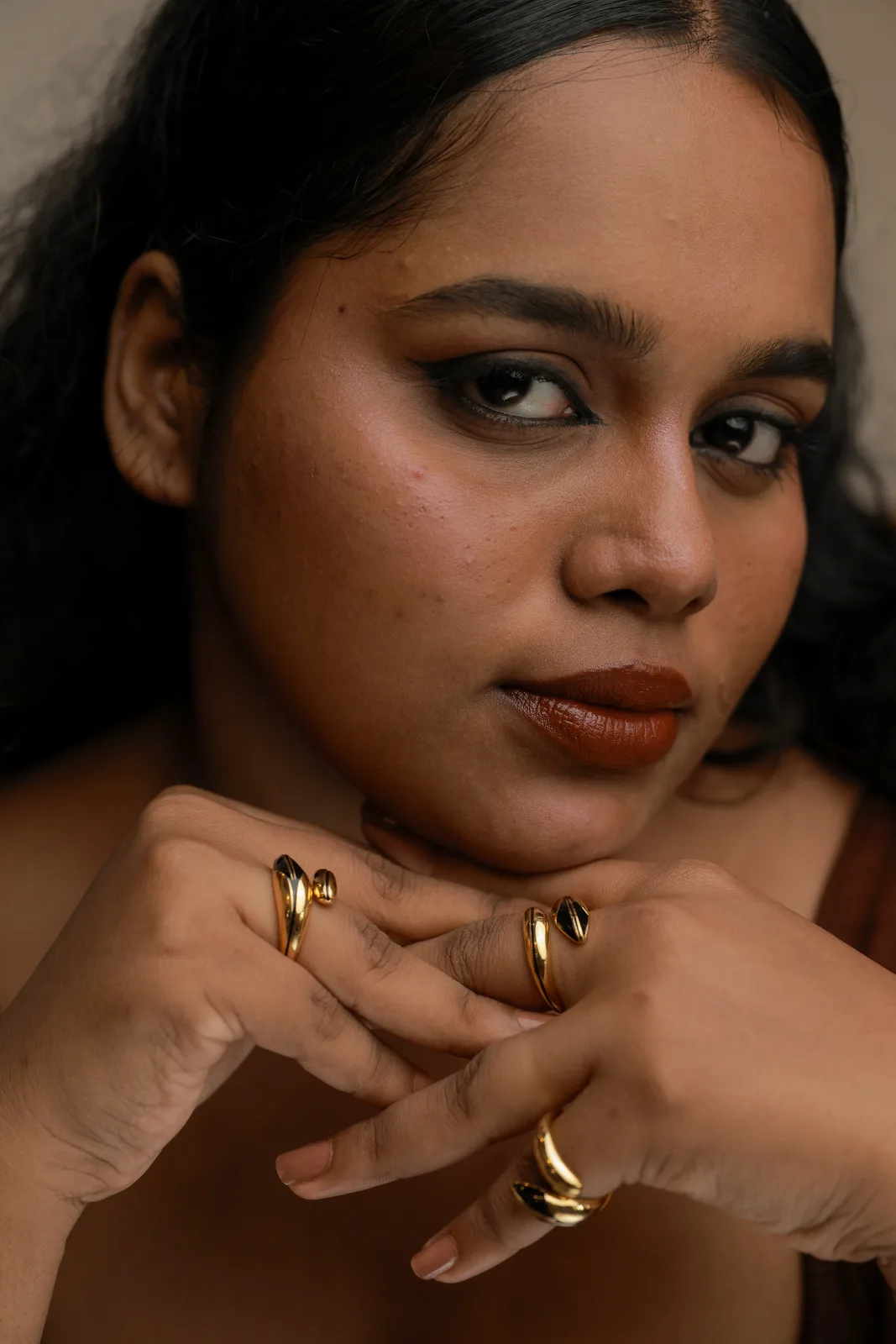
Building something this personal, it turns out, requires both heart and spreadsheets. Fortunately, the sisters have both in abundance. Ask them about their day-to-day dynamic, and Megha will tell you that a typical Theyn meeting starts with thirty minutes of nonstop catching up — what happened during the week, a meme someone found, a piece of stationery someone is inexplicably excited about.
Underneath the jokes, though, is a group that is relentlessly serious about the production process, and eager for perfection. Every sketch goes through multiple rounds of approval before it becomes a CAD design. The brass used is nickel, lead, and cadmium-free. The plating is silver first, then a full micron of 18-karat gold. Their production partners in Jaipur are Responsible Jewellery Council certified - a standard that covers the full chain of custody, from ethical sourcing and labour practices to environmental impact. It is independently audited, genuinely difficult to obtain, and not something most small brands bother with.
At Theyn, these standards are non-negotiable. Having watched each other compromise on jewellery that was affordable, well-designed, and skin-friendly, for years, the sisters are adamant about not asking their customers to do the same.
Do they ever butt heads on product decisions? Mithra answers this by discussing packaging. Specifically, the lining inside the packaging. “Is the packaging as important as the cloth inside the packaging?” she says. “Yes. Somehow it's important to one of us. So now it has to be important to all of us.” That's the Theyn method of agreement (or disagreement, if you see it that way). If something matters enough to one person to raise it, it matters enough for all four founders to take seriously. Love, even when shared between sisters, does after all lie in the details.
When the finished pieces arrive, the sisters also act as QCs; inspecting, admiring, finding the one detail that isn't quite right yet, and going back to fix flaws.
The rigour doesn't come from nowhere. The sisters come from a family of bankers. They don't have a single business bone in their bodies, but do have a love of process, a healthy respect for the things they don't know, and a shared brain that believes stories and design can transcend boundaries.
Megha, with her background in sales, ties everything together and brings it to market.
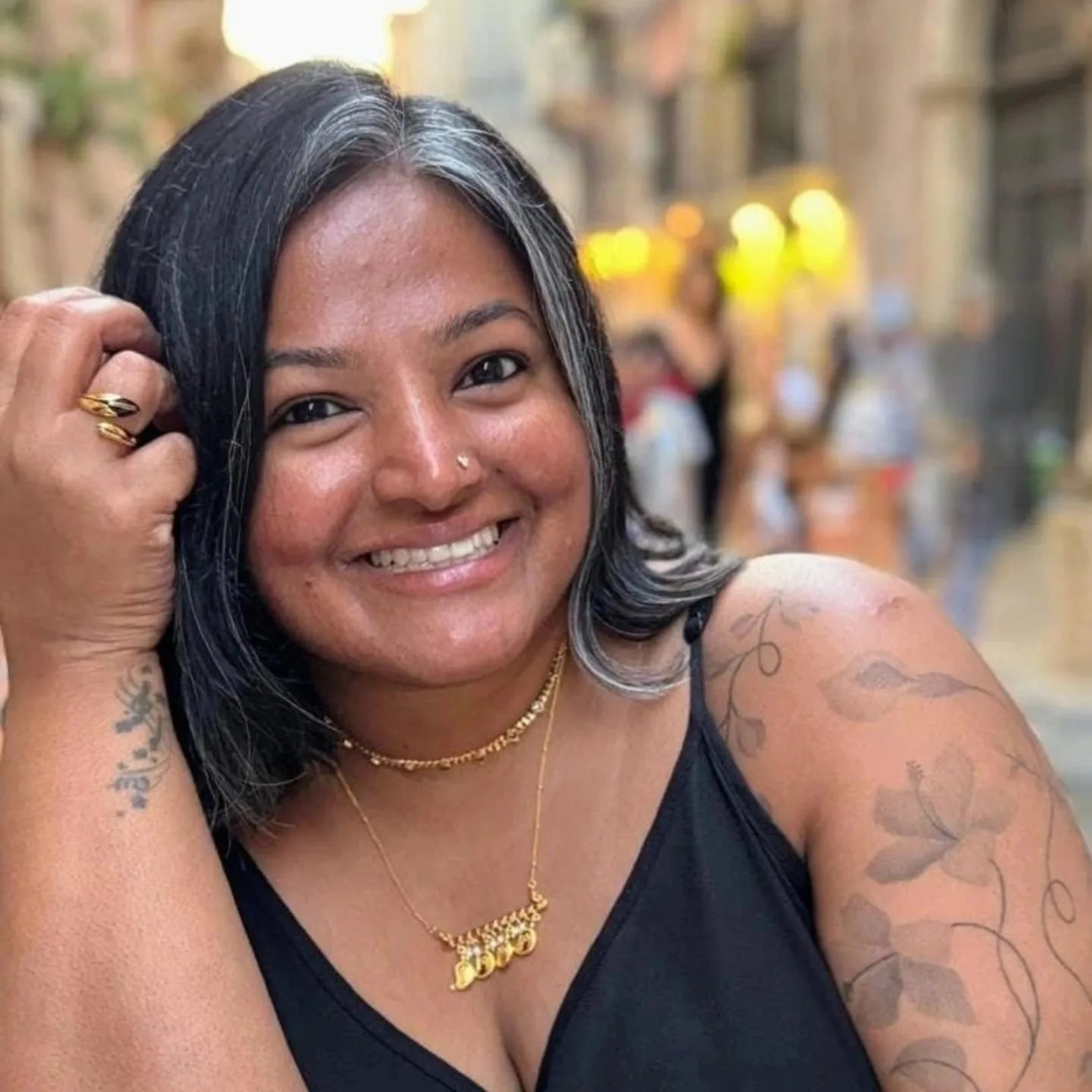
Mona has experience in production — "your best idea is as good as your execution," she says, and she means it.
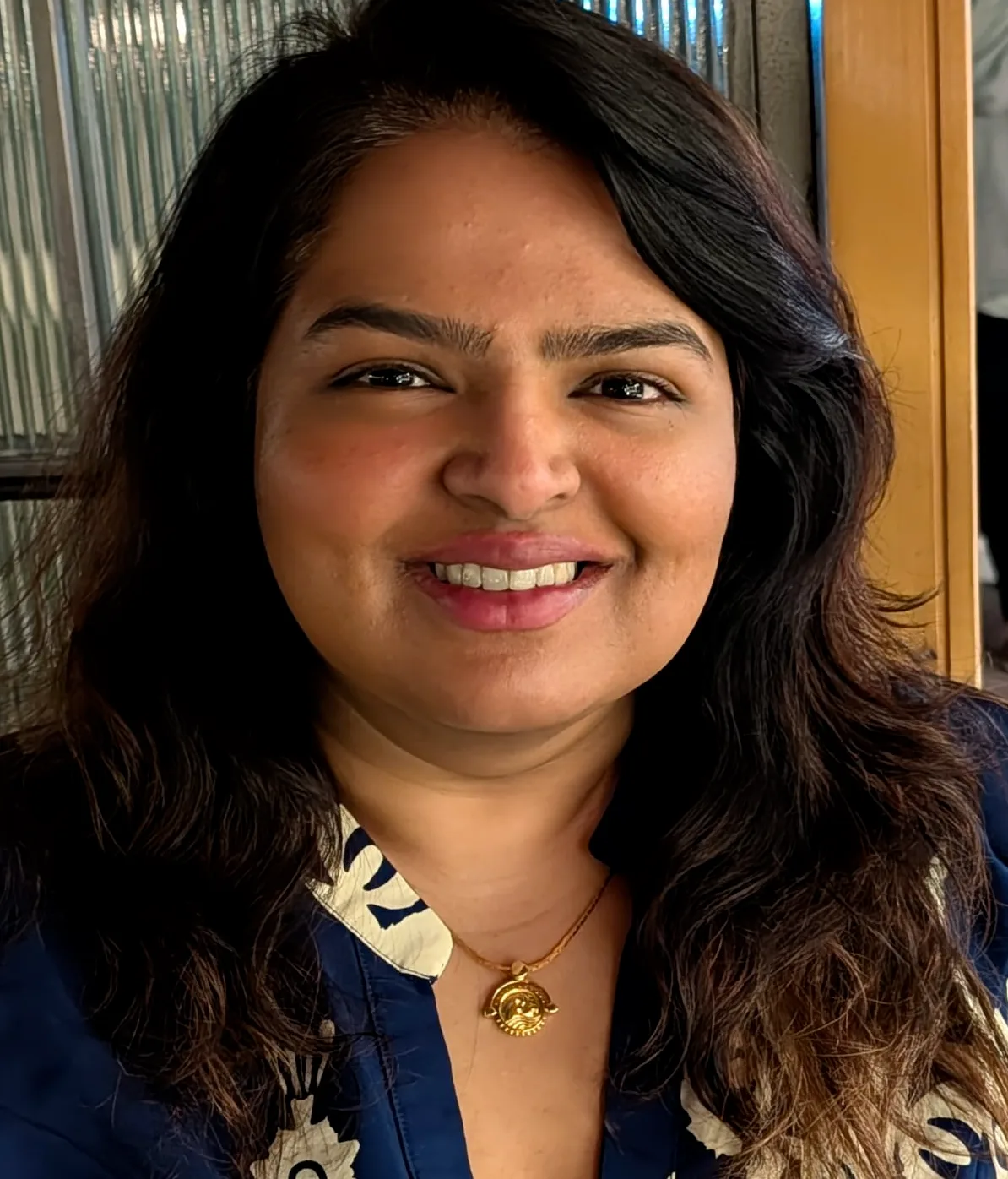
Mitra, whose day job is in graphic design and brand strategy, is the one who decides which t-shirt and which pants brand Theyn wears on any given day.
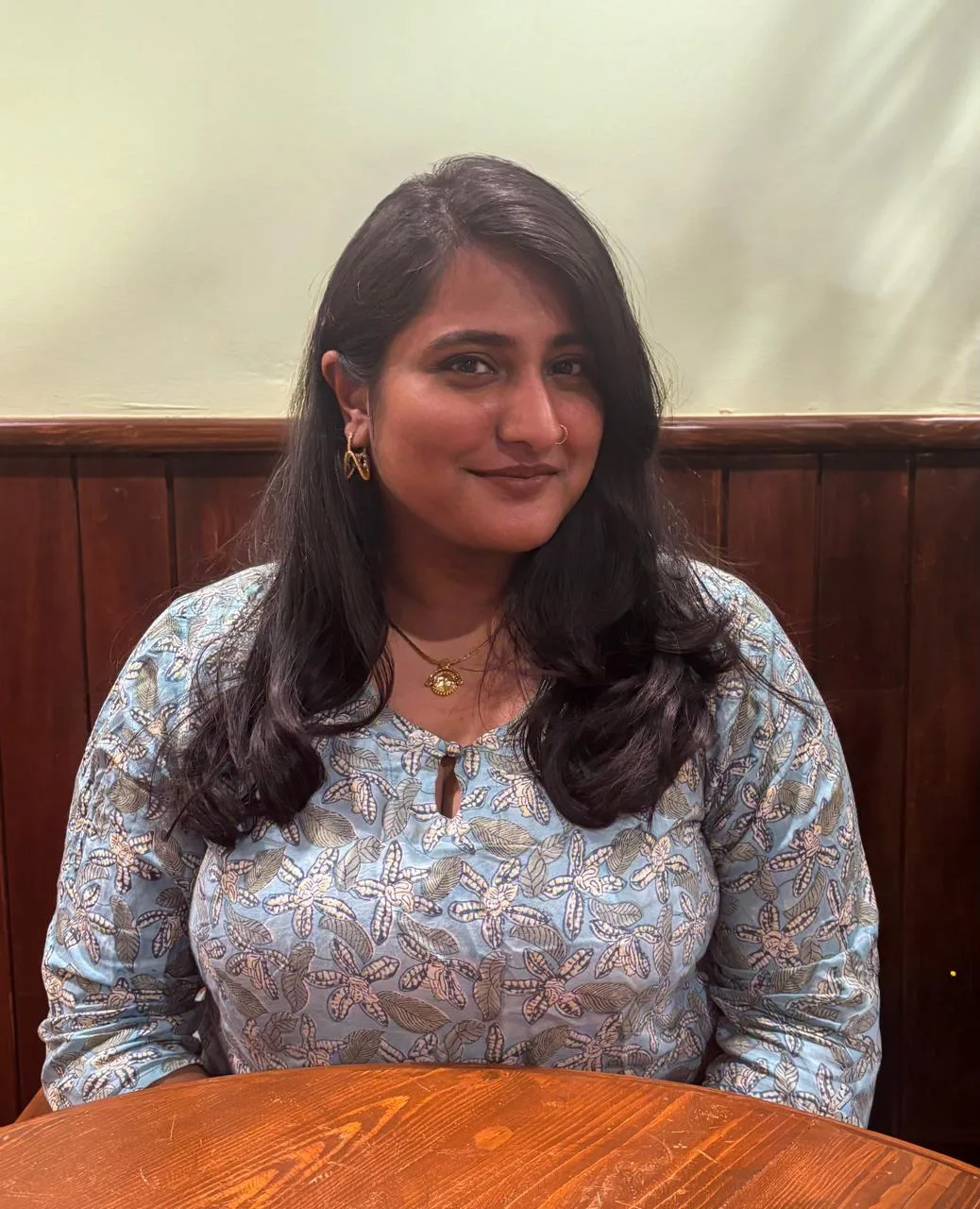
And Meera, with her background in fashion and program management, knows instinctively what will resonate outside the room.

There is no designated CEO, and nobody seems to mind. What there is instead is four people who know exactly what they're each there to do.
Together, they built Theyn across four different time zones, with presentations and Excel sheets and rubrics for everything. Including, when the time came, the brand name.
Chellam, their grandmother's pet name and the original workshop name for the whole project, was a word they loved but, as Megha puts it, "it had a unilateral perspective." They needed something that belonged to both languages equally, that could travel to someone who had never been to Trivandrum and still feel like an invitation. Theyn passed every test.
But Chellam didn't disappear. It lives on as one of the most-loved pieces in their catalogue - a heritage V-shape pearl hoop earring. Each piece in Theyn’s debut collection is named after a family member. Like the Aniyathi earrings, a jasmine-inspired detachable stud and ear jacket set, named after their mischievous younger sisters. Or the Vimala earrings with its palakka (leaf) design, named after Mithra’s mother.

“As the pieces kept coming,” Mithra says, “we realised clearly it's not just a love for Kerala and Tamil culture and jewellery. As we were designing, it evolved into a love letter to our family. A love letter specifically to all the people who've shown us parts of themselves growing up that we still hold really dear.”
Their first collection launched in 2025. Their first photoshoot was, by Megha's account, a sustained series of pinch-me moments. "Is this our piece? Is this our design? Are these our props?" What came out of it, though, was something customers noticed immediately - imagery that felt real rather than performed. No celebrity, no carefully constructed diversity checklist. Just everyday women, in everyday clothes, wearing traditional accessories with a twist.
The feedback since has been the kind that keeps a small bootstrapped business going. Customers have written to say a piece reminded them of something they had only seen their mothers wear with heavy sarees, but they could now wear every day. People with no roots in South Indian culture at all have bought pieces because the design, and the story behind it, felt heartfelt and inviting, rather than built exclusively for a certain ethnicity or culture.
In under a year, they have loyal customers across the globe. Their pieces have shipped to places as far as Japan and New Zealand. "It doesn't matter what's happened for the rest of the day," Mithra says. "One little genuine piece of feedback - that someone told us they wore it outside, that they gifted it to someone and they really liked it - that's enough fuel to last another month."
Theyn is still a small business. Still bootstrapped, still figuring out what comes next, still six months into something they spent a year and a half building toward. At one point during our conversation, the recording software cut out. Megha noted, without missing a beat, that they hadn't sprung for the version with recording. A financial decision that she is okay for anyone else to know!
But small is relative.
"I want us to be part of the conversation when someone talks about Indian design," Mithra says. "I want a seat at that table. I would like for people to view South India in its entirety, as an incredibly diverse cultural place with so much to offer and so many stories to tell that are worth hearing. And if we can be one of the ways that gets out into the world, that would make me incredibly happy."
The jewellery that sat quietly out of reach for decades is out in the world now; worn to offices in Dubai, Singapore, and New Zealand, to Sunday brunches and ordinary Tuesdays. Made from brass and gold and the particular sweetness of something that doesn't age, doesn't tarnish, and doesn't need a wedding to justify it.
Theyn. However you say it, you know exactly what it means.

About the author
Kumari Trishya
Trishya has been a writer and storyteller for 15 years; a career she began after failing her MBBS exams. She now believes it was her calling all along. She has spent those years embedded in some of India's most recognised startups, but what she really does — regardless of what her job title says — is find the one story a brand doesn't know it's sitting on, and echo it in a way that makes people feel something. She believes good content doesn't just inform. It changes minds, builds trust, and occasionally makes someone cry on a Tuesday afternoon. When she isn't telling other people's stories, she is working on her own as a closet poet, committed plant mom, and someone constitutionally incapable of walking past a dog without stopping to make friends.
Stay in the loop
New pieces, when they're ready.
No newsletters. Just a note when something worth reading goes live.
Read this next
The Most Important Things at Manam Chocolate Aren’t Made of Chocolate

Steeped in Science: How Alt Carbon Made Darjeeling an Unlikely Climate Lab
Bangalore's Women-only Cab Service, Built By A Woman With A Hundred Rupees And No Plan B