Bangalore's Women-only Cab Service, Built By A Woman With A Hundred Rupees And No Plan B
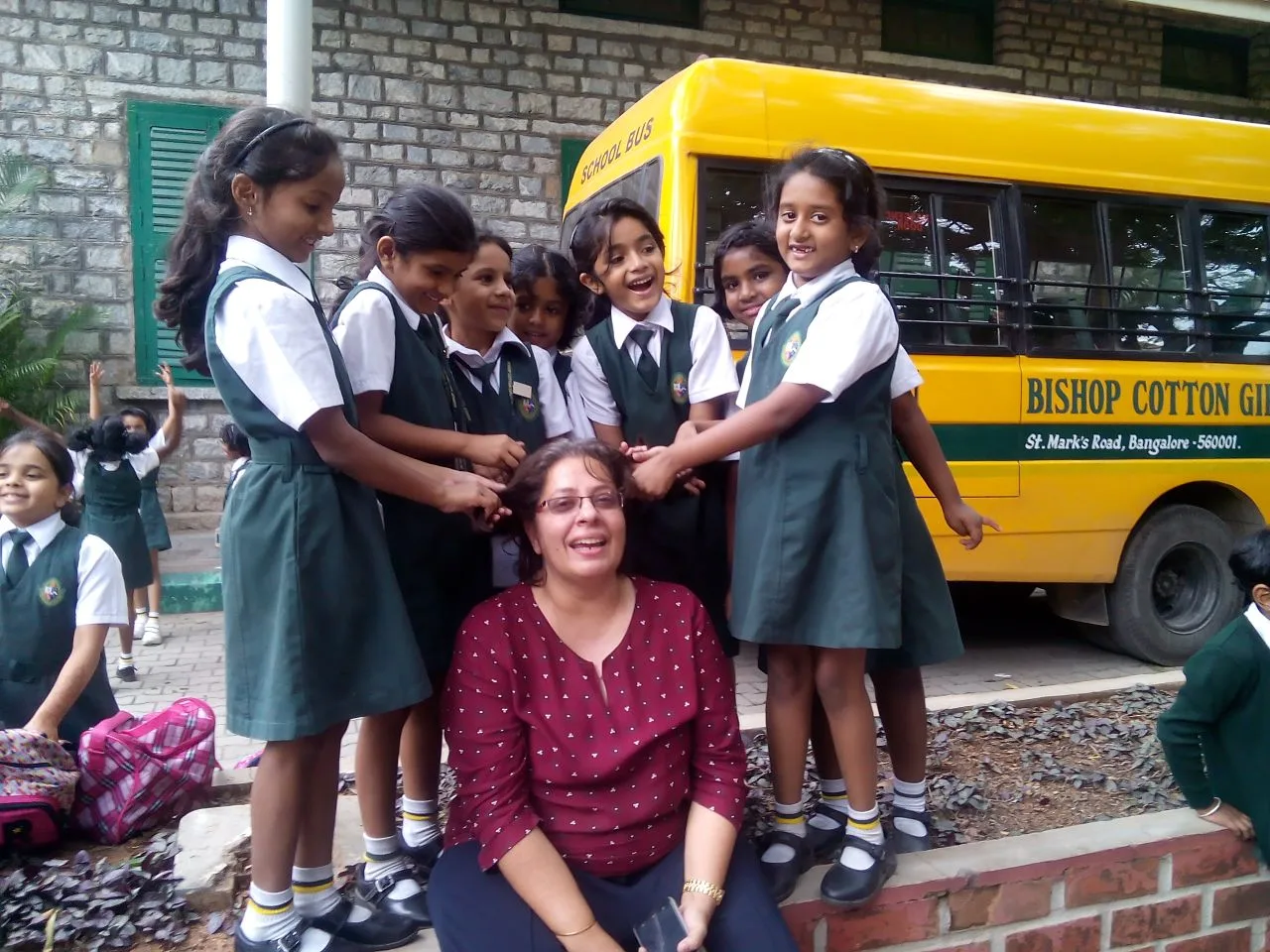
Vandana Suri was not supposed to be a taxi driver. She was supposed to be the school prefect, the one who got 95% and intimidated everyone with her intelligence. The one who fit the mould of her all-girls Mumbai Catholic school perfectly.
That perfection followed her everywhere. Married into one of the city's elite families, she spent years at finance bigwigs like ABN AMRO, Standard Chartered, and Aditya Birla. She was good at relationships and building trust that most of her male colleagues were too impatient to earn. As a cog in the corporate wheel, she was a mix of resource and rebellion - selling financial products she wasn't in love with, but also putting her foot down when she should have stayed quiet, calling out superiors who underestimated her, and quietly watching products she'd refused to push collapse exactly the way she'd said they would.
She was, by most measures, doing okay.
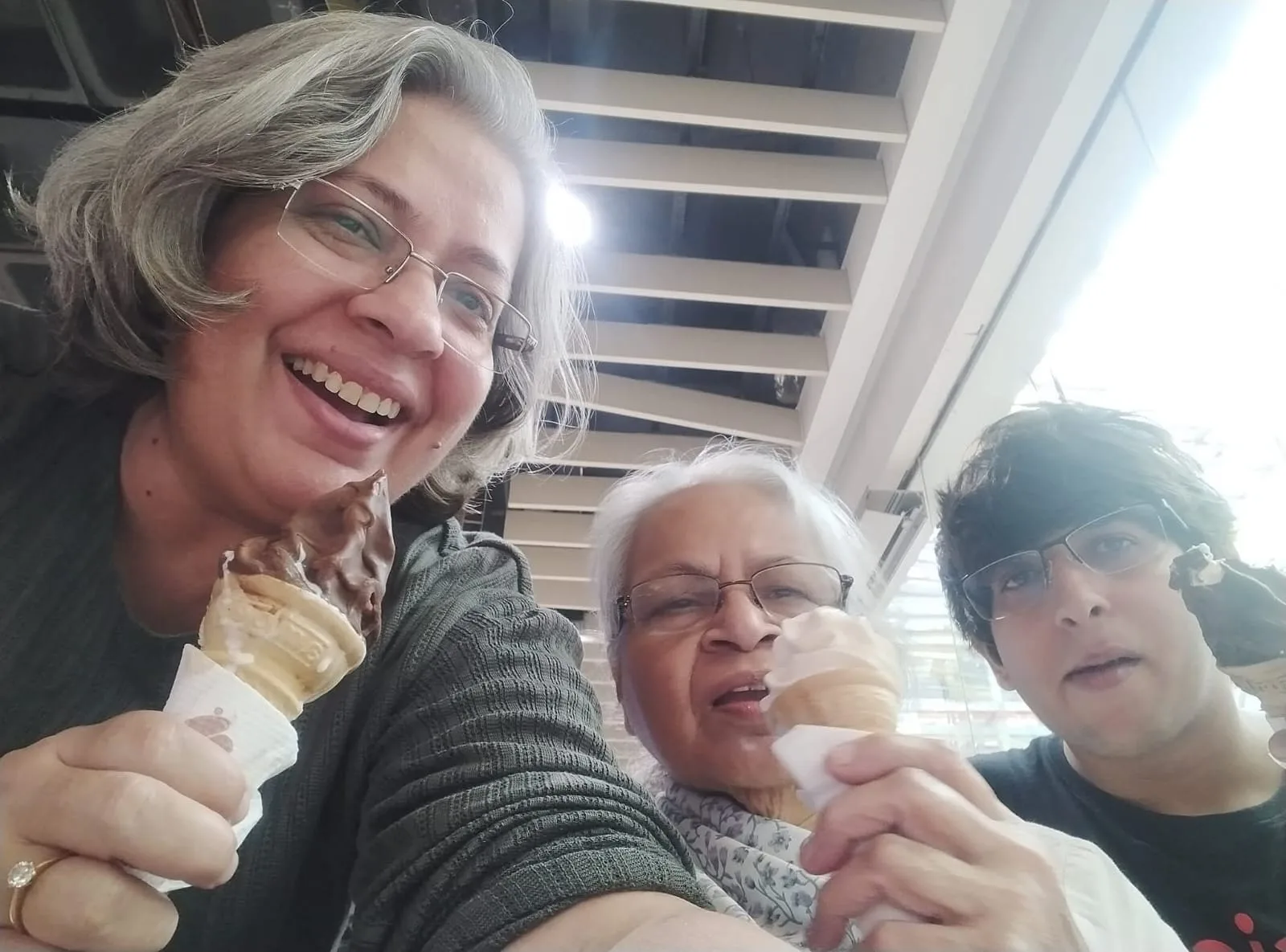
Then, her marriage ended. She was left with a one-year-old and a hundred rupees, scrambling for a job at the same banks that had once treated her like royalty because of her husband's last name.
This could easily have been the story of a single mom rebuilding from scratch. But ‘Vandy’ has always been someone who runs toward the fire, not away from it.
And in December 2014, something lit.
A female passenger in Delhi was raped by her Uber driver. In the aftermath, she said one thing that Vandana couldn't put down: if there had been a woman driving me, this would not have happened.
Already raw, furious, and done with the way things were for women in the country, Vandana decided to do something. "I think I was waiting for that," she says. "It's like that switch in your head; maybe that was needed. All these years, as a child, as a teenager, I faced abuse multiple times. And when she said that, something really…it just pushed me. It's that solid throttle inside you. You can't stop it."
She didn't do a market survey or consolidate a strategy room. She put up a Facebook post instead, asking for women drivers, and 3,000 women called, commented, and texted. Not a single driver among them, but more than enough validation.
That's how TaxShe was born. Out of rage, and a single mother's refusal to accept that this was just how things were.
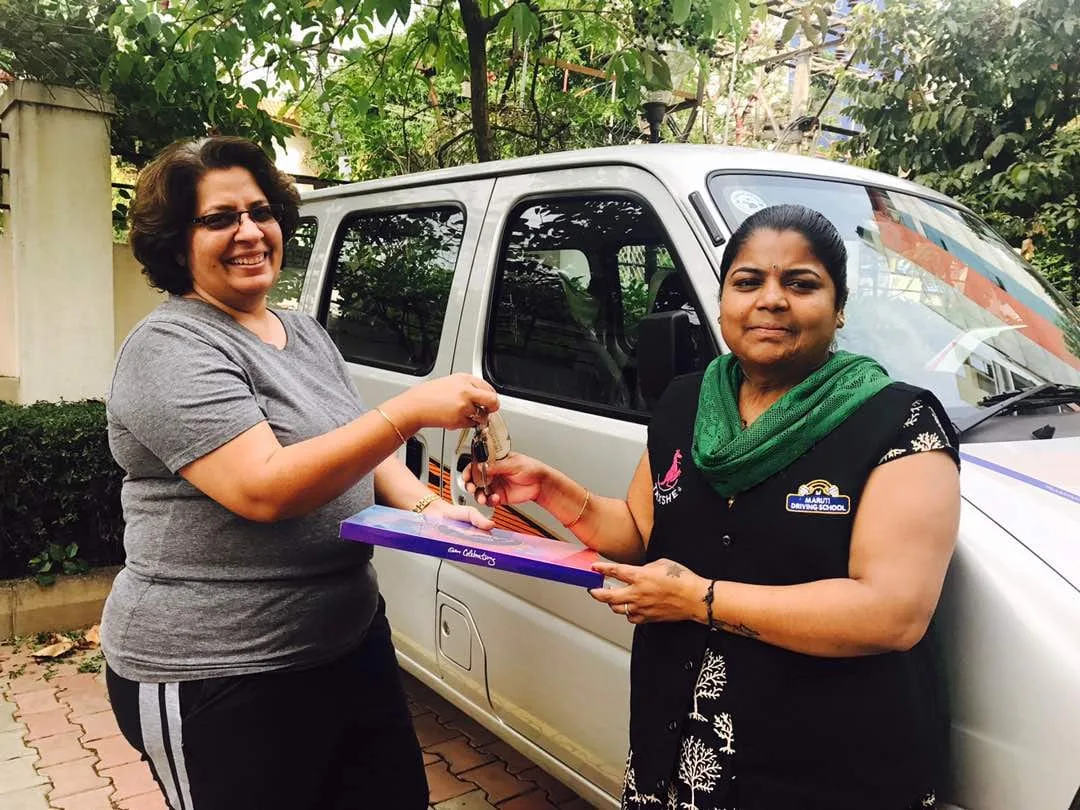
Vandana was TaxShe's first driver. Her very first gig was driving two small girls to and from their swimming lessons, and she still remembers how they jumped around the backseat like frogs - completely unbothered, completely themselves, and completely safe.
Later that day, she texted the mother for feedback, intrigued that she hadn't once checked in to see where her daughters were. When the mother finally messaged at night, she said: I have never once in my life not tracked a driver mid-trip. I do it with every male driver. With you, I just didn't think about it. Instead, I went about my daily work knowing my girls were safe.
Vandana still talks about that message. About the validation, the gratitude, and the feeling of being able to bring peace to women who are constantly exhausted by having to keep their radars up. That, she says, was always the whole point.
People around her had differing reactions, though. Her mother's reaction when she heard the idea? "She literally fell off her chair," Vandana laughs. "And then she said, will you at least make forty, fifty thousand rupees a month? Will we have food on the table? I said yes, Ma. We won't go hungry. And she said, okay then, go."
Her brother's reaction was somewhat different. He wept on the phone and told her she must have lost her mind because why else would she be driving taxis? A few months later, once the idea had started to take shape and the calls kept coming, he rang again - this time to ask why she hadn't brought him into the company. "What will a man do in my company?" she asked him. He persisted. She eventually gave him a stake, at the same premium as every other investor. He's her brother, yes. So what!
Despite the demand for the service, getting women onto the road as drivers was hard, and Vandana is honest about why. Male drivers on platforms like Ola and Uber routinely spend up to three consecutive days on the road, sleeping in their cars, without access to clean toilets, bodies breaking down slowly and quietly, staying available because their productivity scores determine what rides they get the next day. Vandana believes the weight of that life is part of what comes home with them - the exhaustion, the frustration, and the violence that nobody connects back to a man who hasn't slept in a bed in three days. Everybody talks about the funding rounds and the valuations. Nobody talks about what the drivers are actually living.
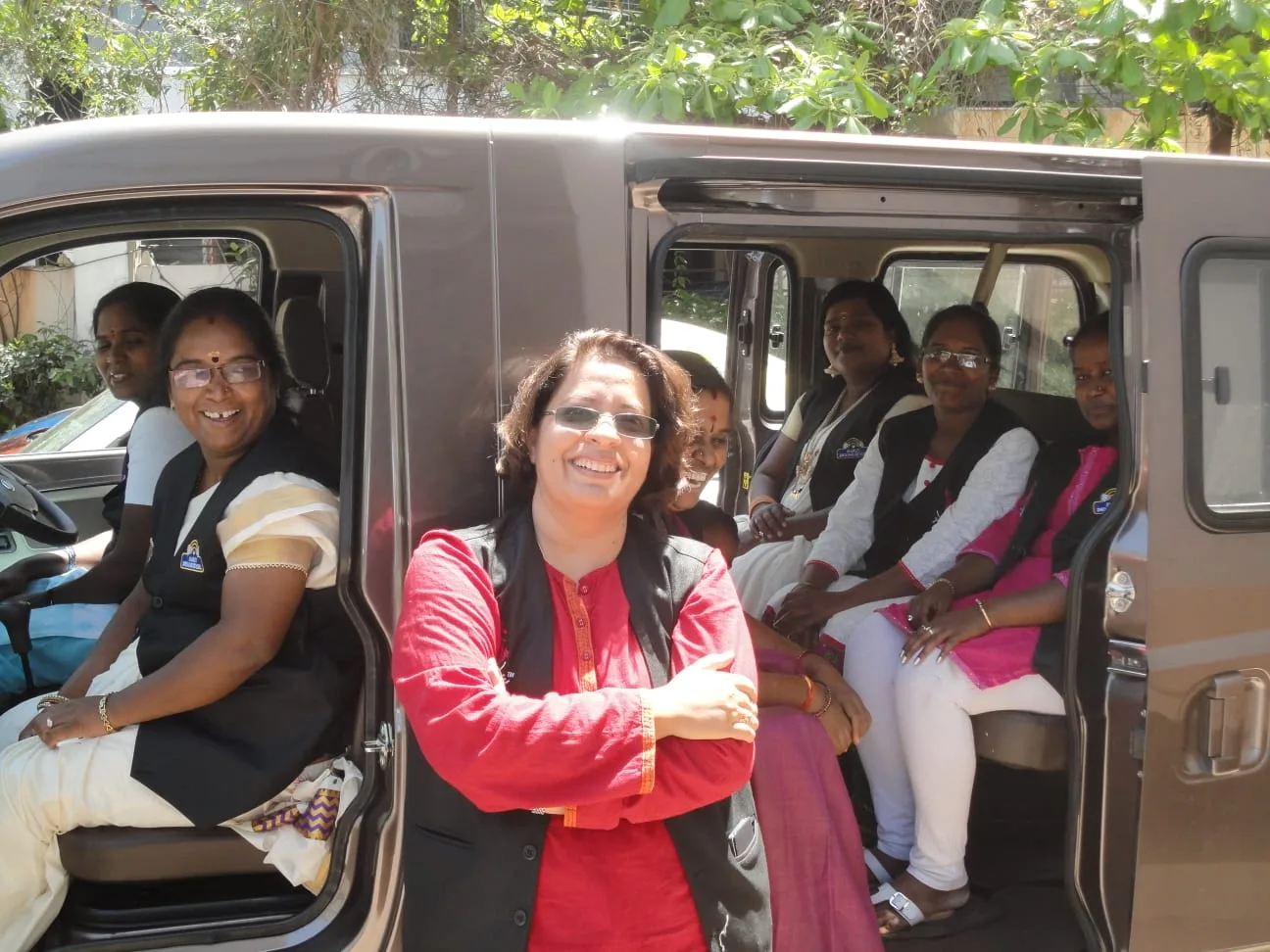
Women won't, and cannot, do this. They need to be home when someone falls sick. They need clean toilets. They need routes close enough to their families to make the work sustainable. Existing cab companies have no interest in building that structure because it costs more and scales less cleanly, so Vandana has been building it herself, from scratch, around their lives.
Add patriarchy to the lack of infrastructure, and you have a system designed to fail women twice over. Even when Vandana convinced a woman to join — and then convinced her husband, and then her mother-in-law — the dropouts kept coming. A woman would start earning more than the man in the house, and egos would shatter. For years, Vandana couldn't understand why the women she trained kept disappearing after a few months. Now she does, and she tells every woman before they start exactly what is going to happen and exactly how to hold their ground.
The women who have stayed have bought land. Saved for their children's college fees. Put RO water purifiers in their homes and celebrated it as the milestone it genuinely was. They also formed some of the most unexpectedly tender relationships — with the children they drove, the families they became part of, the employees who waited for them during a late-night pickup. Vandana named them ‘Roos’ — after kangaroos who are both maternal and fierce, with a joey in the pouch and a readiness to kick.
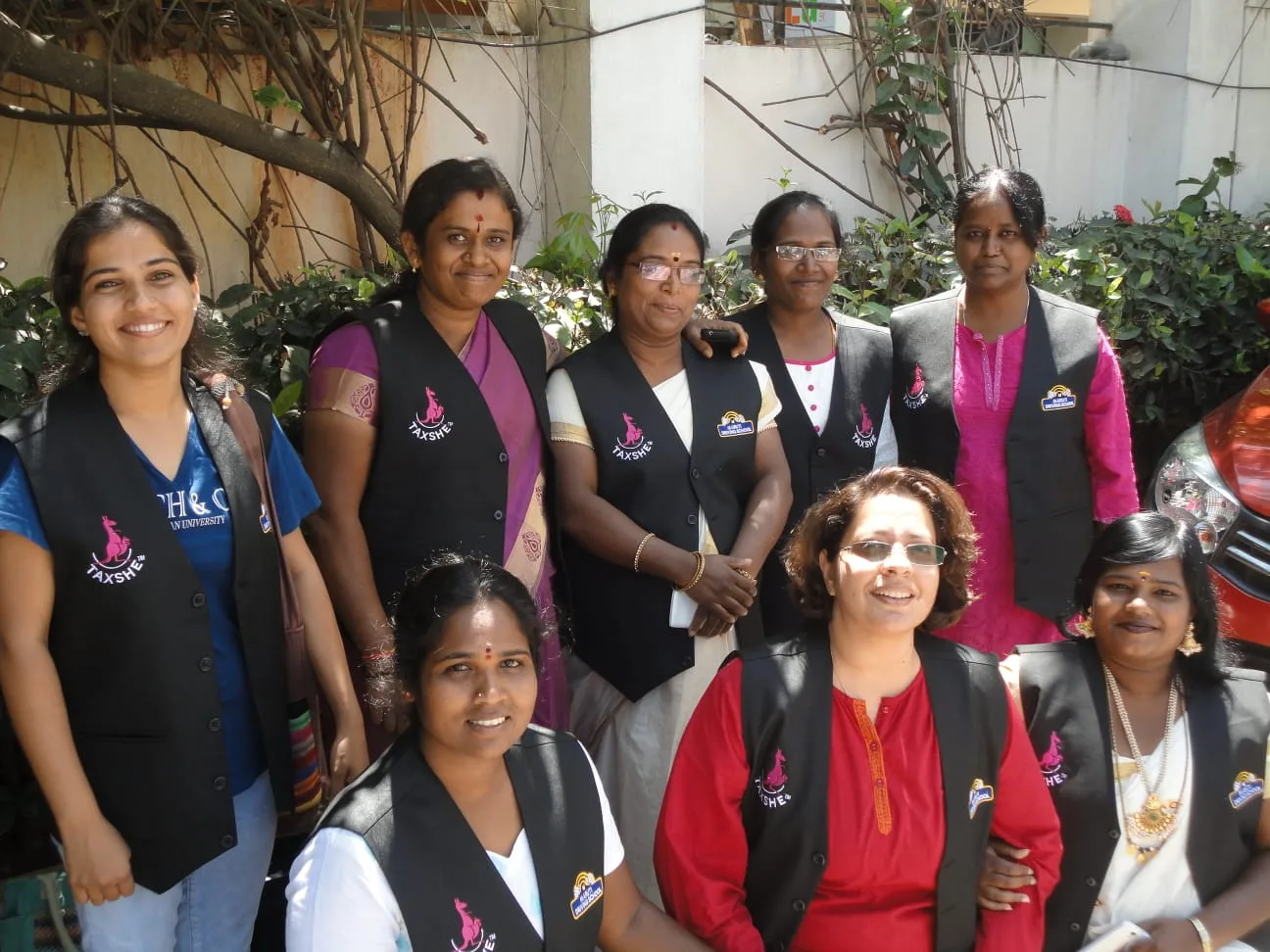
In Bangalore, the word ‘Roos’ has since taken root, much like Xerox replaced photocopy. It isn't just a job title. It is an identity rooted in respect and safety, and it belongs entirely to the women who carry it.
By 2019, TaxShe had fifty-six cars on the road, and then the world flipped over.
Seven months into the pandemic, with no income and salaries still being paid out of her own pocket, Vandana was Rs 70 lakh in personal debt. For the second time in her life, she was staring at an empty bank account.
But even in the worst of it, she didn't stop entirely. During the lockdown, while ambulances weren't running and the city was sealed, TaxShe kept a handful of cars on the road for the women who needed to run to safety.
Women called in the middle of the night, beaten, with nowhere to go, and Vandana's team got them out. She describes this period — broke, indebted, running on fumes — as one of the most purposeful of her life. "When you know you are the only option for someone, you find a way," she says.
At her lowest, she applied to Ola for a job, and they took four months to call her in for an interview. A female founder with years of on-road experience building safety for women, and the country's biggest cab platform, couldn't move faster. Does that anger her? "Of course it does," she says. "But what can I do? I went anyway."
The night before the interview, a small donation was deposited into her NGO's account by Concern India Foundation. "Small money, nothing major," she says. "But that money hit one day prior, and that was my sign that the God up there is telling you, don't stop." She went to the meeting because cancelling felt rude, and told the COO she wasn't taking the job. He told her he wanted her to train 15,000 women drivers in six months. Vandana flat out refused, knowing that building a fleet of female drivers isn't a sprint.
"I keep saying I'm sowing the seeds, but people don't want to give the time for the crop to grow," she told him. "It is a long gestation time. This is like farming. You have to sow the seed, and you have to wait for the crops to come. Everybody only wants the crop. Nobody cares about the gestation time."
TaxShe came out of the pandemic without a fleet, but with a different vertical. Women asked Vandana to help them learn to drive, because their husbands were sick and the ambulances weren't coming, and they had nowhere else to turn. Corporate clients who had always relied on drivers found themselves stranded. Vandana started teaching and found another way to help women, and women drivers find respect.
She remembers a client who called her in tears, because her 13-year-old had told her she was good for nothing for not being able to drive them to tennis in the rain. "I called you from the toilet seat," the woman told her. "I was having a breakdown." When she finally learned to drive, her daughter looked at her differently.
"If a woman knows how to drive, first of all she's safe," she says. "She's not exposing herself to a cab or public transport. She's keeping her children safe. But more than that — she is seen differently. By everyone around her. And by herself."
This had been inside TaxShe all along — not just getting women safely from place to place, but making women capable of getting themselves there. The respect that comes with that, Vandana will tell you, is worth more than the licence. TaxShe Break Free now runs across thirteen franchise centres in India, with thirty-five hundred women who have felt it for themselves.
None of this happened alone, and the people who held it together deserve more than a footnote.
Her mother — the woman who fell off her chair – has since become what Vandana calls the steel rod behind all of it. She no longer asks when Vandana is going to learn how to cook. She knows, now, that this was always what her daughter was meant to do.

Her brother has taken over TaxShe's operations — the training, the quality management, the daily engine of everything — and has long since stopped asking for a family discount. He’s stayed up nights with her, tracking the Roos and their cars (fitted with OBD tracking devices). "Anytime there was a night drive, one of us at least would be awake," Vandana says. "And the girls knew that. So they were actually very comfortable." She calls him the man behind the women's organisation, and she means it with both affection and a completely straight face.
And then there is her son, 22 years old, raised in a house where feminist politics was the dal chawal; everyday, unremarkable, just the air they breathed. When he was still in school, learning about the French and American revolutions, his class was asked to write about a revolution happening in India. He wrote about his mother’s unwavering fight to create safer spaces for women in India, and the conversations unfolding at his dinner table. Vandana still talks about that essay the way some people talk about awards. He now runs Single Sisterz with her — a women-only homestay collective that grew from the same impulse as TaxShe, creating spaces where women's antennas can finally go quiet. She finds it remarkable that the thing she set out to change in the world changed first, and most completely, in her own home.
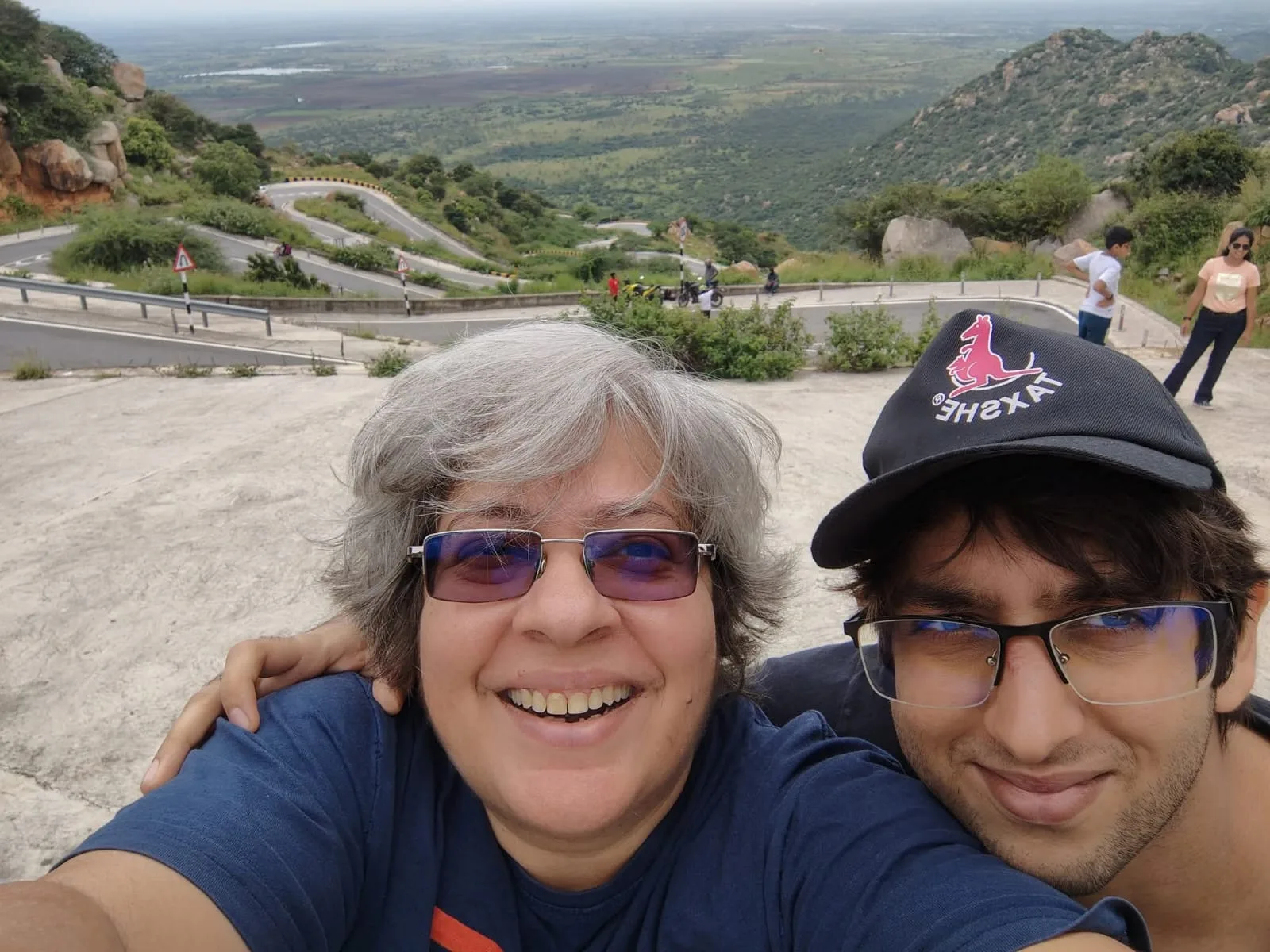
Vandana is now fifty, single for twenty-two years, debt finally cleared, still working from a home office, still bootstrapped. Still here.
The world has noticed what she's built. She has stood in rooms with representatives from 188 countries at the World Bank in Washington, been recognised by the UNDP as an SME champion, and been written about and felicitated countless times.
Leaders love to talk to her about women in mobility. They are fascinated by what she’s built. And yet, eleven years later, she is still one of the very few people actually doing something about it on the ground.
She is not angry about the funding that never came, or the lack of support or effort from the big players in the market. What she always comes back to is not the numbers or the recognition. It's the working mom who had a full day of peace because her daughters were safe. It’s the homemaker whose teenage daughter started respecting her all over again. The Roo, who was home sick with dengue for a month, woke up every morning to calls from the kids she would normally drive to school on her usual route.
That is what 11 years have built. Not just a cab company, but a place where women, for the first time in many cases, felt safe – both the ones driving, and the ones being driven. Where they were respected. Where they learned that the tyre going flat is never the end of the road.

About the author
Kumari Trishya
Trishya has been a writer and storyteller for 15 years; a career she began after failing her MBBS exams. She now believes it was her calling all along. She has spent those years embedded in some of India's most recognised startups, but what she really does — regardless of what her job title says — is find the one story a brand doesn't know it's sitting on, and echo it in a way that makes people feel something. She believes good content doesn't just inform. It changes minds, builds trust, and occasionally makes someone cry on a Tuesday afternoon. When she isn't telling other people's stories, she is working on her own as a closet poet, committed plant mom, and someone constitutionally incapable of walking past a dog without stopping to make friends.
Stay in the loop
New pieces, when they're ready.
No newsletters. Just a note when something worth reading goes live.