The Most Important Thing We Marketed Wasn't Pickleball
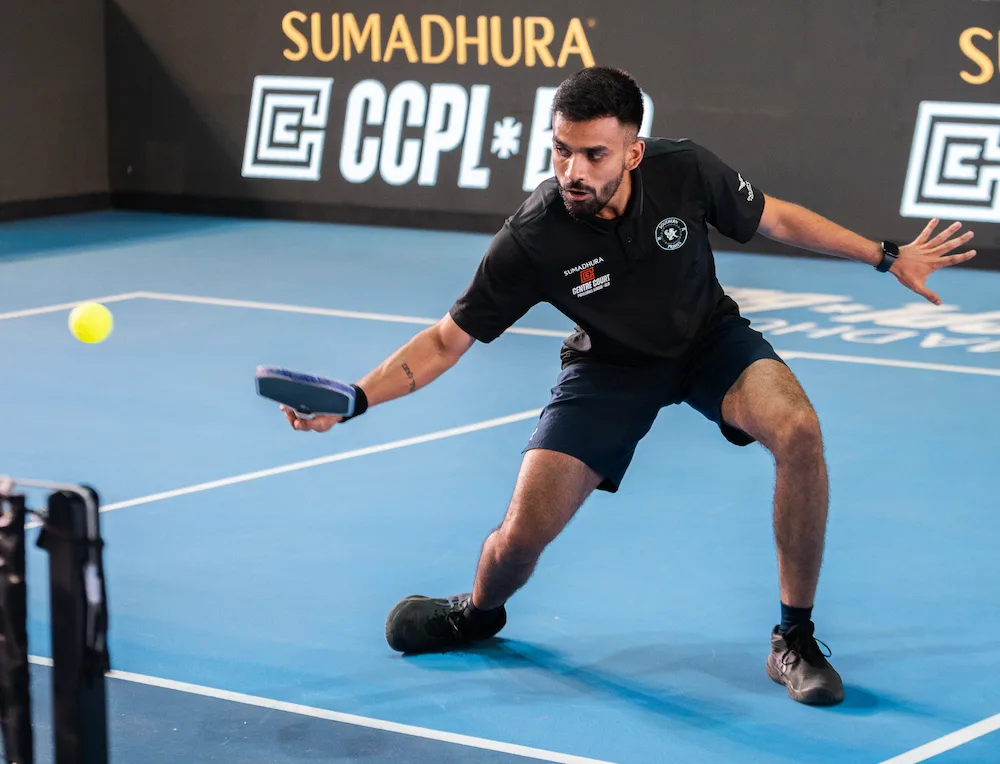
When we started working on Centre Court Pickleball League BLR, the brief looked, on paper, like a sports brief.
Bengaluru’s first franchise-style pickleball league. Six teams. Ten players each. An auction. Seven weeks of competition. Professional players alongside former athletes and people who had found their way to pickleball much more recently. And then there was the fact that the league was arriving in Bangalore, after a stellar launch in Hyderabad. And as Hyderabad does with most things, it was a glitzy affair.
Co-founder of the league, Yashwanth Biyyala, showed me around the arena, literally two nights before kick off and said, “I believe in this Aakanksha, I think we have something great coming up.” Being a sports fan, that is all I needed to hear. You don’t get to have passion meets profession all the time. So when the opportunity shows up, you grab it.
There were fixtures to announce, players to talk about, rivalries to build and, eventually, winners to crown. So there was a fairly obvious way to market it.
Hitting The Tough Shot
Thankfully, we didn't didn't take that route.
Because by the first couple of Saturdays at Chamara Vajra, something else was becoming much more interesting. The matches began at 4.30 in the afternoon and went on until 11 at night. Yet people weren't behaving like spectators at a tournament. They weren't showing up just for a match or two, and leaving when it ended. They were properly settling in.
Before the opening match, hosted by the Rally Renegades, I am certain the league owners, teams, and anyone else associated with the league was part excited, part apprehensive. What were we doing here. IPL was on. ISL was on. It was the Bangalore monsoon. Yet, a few hours later, we were pumped and how. What a turn out. I remember asking Yashwant for a quote for the press release. “It’s unbelievable. This is just what we hoped would happen.” Luckily I poked and prodded more to get more from him despite his excitement and exhaustion.'
“Last night was exactly what we hoped this league would become – competitive on court, but just as alive off it,” said Yashwanth Biyyala, Co-founder, Centre Court Sports and Entertainment. “To see over a thousand people show up, stay through the matches, engage with the sport, and really own the space. It tells us that Bengaluru is ready for this. This isn’t just about pickleball. It’s more about building a sporting culture that people want to be part of,” was the quote we finally sent to press. And it was spot on!
Playing It Right
But still, seven weekends of this? Audacious? Yes. Impossible. Hell no! When Game Week 2 had to be postponed thanks to the massive storms, we didn’t think most would notice. But the city was disappointed. There was someone already looking forward to the next game? And cared enough to whine about it being cancelled on Instagram. Yes, yes, more of that please. Thank you.
And the next few weekends rolled by, we noted so much about Bangalore as an audience.
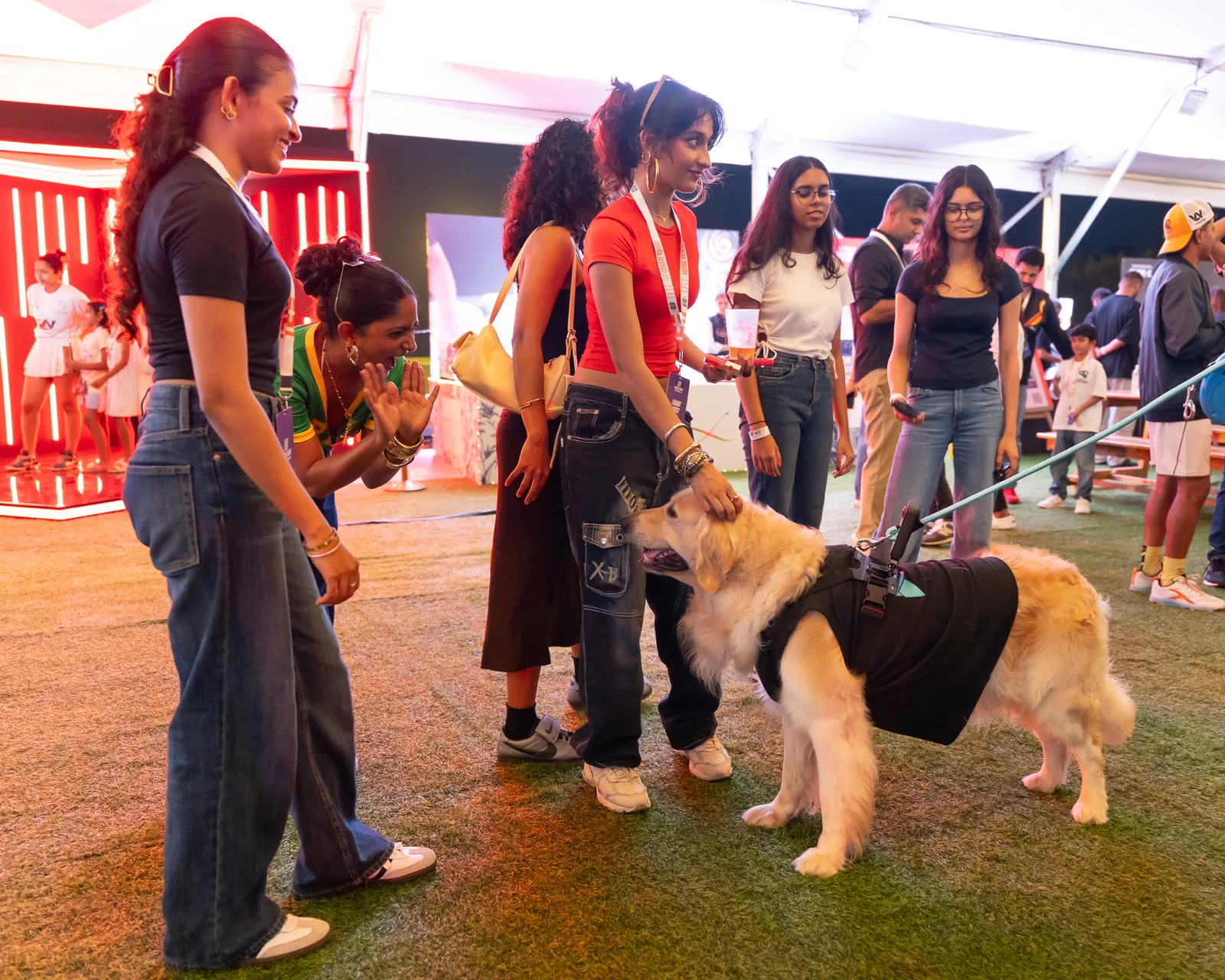
Someone would come to watch a friend play and still be there three hours later. Families came. Dogs came. People who knew exactly what was happening on court sat alongside people learning the scoring system from whoever happened to be next to them.
And every week, the place changed a little.
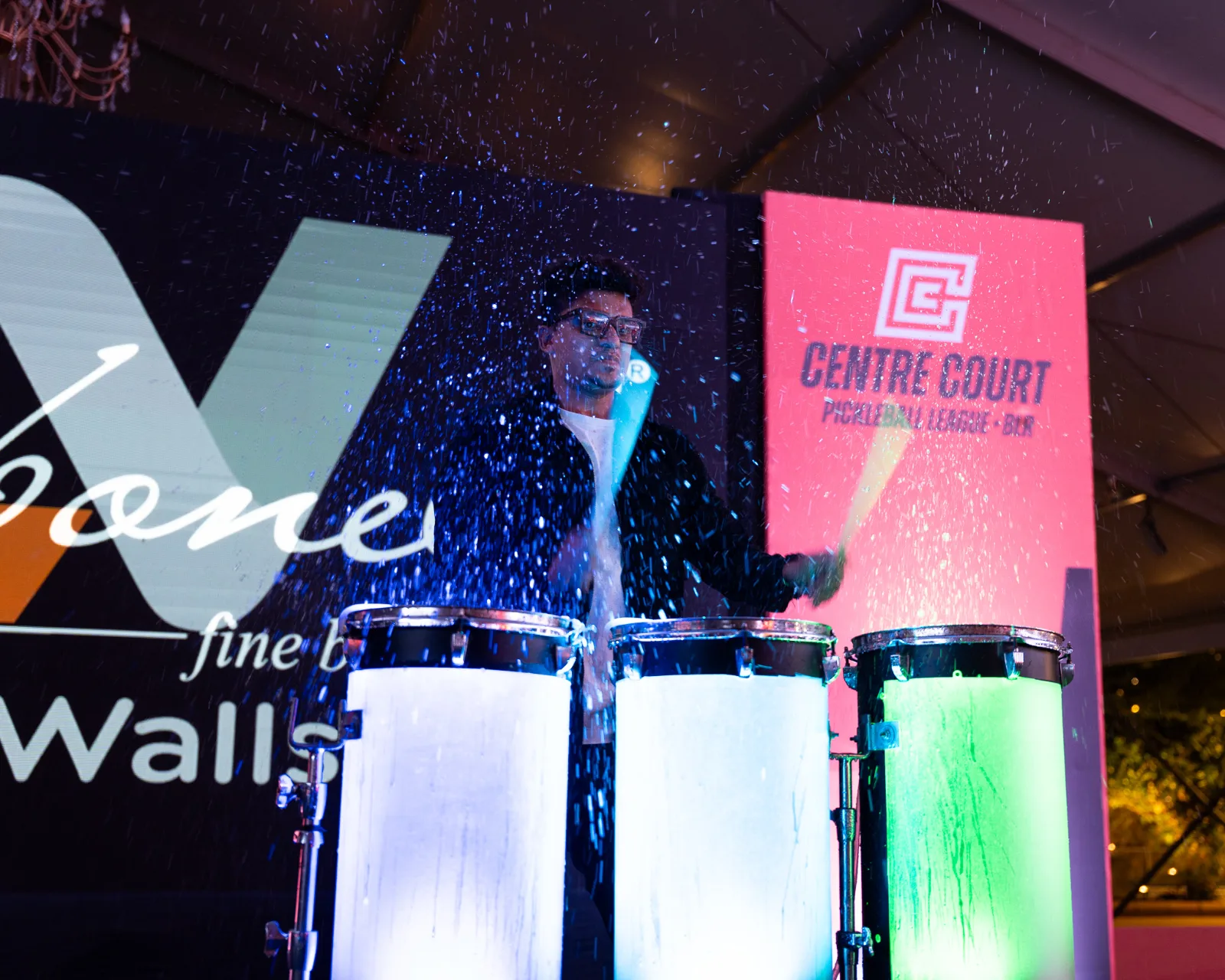
There was Ved Prajapati playing the tabla on opening night. Later there was comedy, live music and entertainment between games. There were collaborations with 56 Run Club. Monkey Bar one weekend, Mezcalita, Araku Coffee, Serious Slice, Labonel, Red Rhino, Super Naati and others became part of what you associated with being there.
The sidelines became almost as interesting as the court.
There were people moving between matches, snack time, and dinner, players being stopped for conversations, friends arriving halfway through the evening, someone discovering a new food pop-up, someone else becoming far too invested in a team they'd known nothing about three weeks earlier.
One rainy evening made the point particularly well. The weather should have emptied the venue. Instead, people stayed. Vikrant Rao, the other co-founders of Centre Court, described it later as people staying for “music, comedy, conversations, and the matches.”
Because somewhere along the way, the product had become bigger than the sport. And our job as the PR team – with social media mischief thrown in – was to recognise that before we flattened it back into match reports and winner graphics.
So our thinking changed.
A conventional sports communication plan would have asked: Who won? Who played well? What's the table looking like? Who are the players to watch? We still needed to answer those questions. But we started asking different ones too. Why are people who don't play pickleball spending six hours here? Why are they bringing friends back the following Saturday? Why are the food, outfits, dogs, jokes, music and people showing up in everyone's camera rolls alongside the matches?
What makes somebody start supporting Southern Primes or Net Ninjas when, six weeks ago, neither name meant anything to them? How did people go from not knowing who Sharmada Balu is, to becoming a fan overnight? How are they so involved in the Rashein Samuel vs Rishi Reddy showdown, when last week you didn’t know which was which?
And how do you communicate a sport that is becoming a social identity almost as quickly as it is becoming a competitive one?
That thinking changed our PR.
We switched our narrative. Instead of only pitching a new pickleball league, we could talk about a new Saturday-night ritual emerging in Bengaluru. It changed the way we thought about social too. It was what Yashwanth and Vikrant’s vision was. And lo and behold, we started marketing (or perhaps documenting) a culture instead.
The story wasn't: Bengaluru has a new pickleball league.
It was: Bengaluru might have found a new kind of social space for Saturday nights.
Instead of pitching Centre Court BLR as just another sporting event, we pitched it as a story about Bengaluru's changing social culture. A city discovering a new weekend ritual. A sport becoming a community.
The coverage reflected that thinking. Publications including LBB, The New Indian Express, Deccan Herald, The Wire, and PTI each picked up different facets of the story – from the rise of pickleball and the league format to the atmosphere, partnerships and community growing around it.
And increasingly, we found ourselves looking outside sport for inspiration.
At nightlife. Running clubs. Fashion. Food culture. Internet subcultures. The places where people don't simply consume something; they use it to say something about themselves. Because that's what we were watching happen to pickleball. By the end of the league, close to 10,000 people had come through Centre Court across six match weekends. More than 20 food, beverage, hospitality and entertainment partners had been part of it.
Those numbers are useful. But the better measure, for us, was that people came back. They knew the teams. They recognised the players. They had opinions. They had their usual food stop. They knew who else would probably be there. A venue had started acquiring the behaviour of a neighbourhood hangout.
By 5 PM the first matches had barely settled into rhythm, but the food stalls already had queues. A group that had come to support one player was now cheering for another. Someone's golden retriever had become more recognisable than half the players. A couple who'd wandered in out of curiosity were asking when the next fixtures were.
And it wasn't just casual spectators. Some of the most respected voices in Indian sport kept returning too. Veteran sports journalist Sharda Ugra gave the league an early vote of confidence. Cricket writer and author Karunya Keshav, despite deadlines and life with young twins, regularly carved out entire Saturday evenings to watch the matches from start to finish. It was her break for Pickleball and Pizza. These are people who have spent years around the biggest sporting events across the globe - from Roland Garros and Wimbledon to cricket world cups, over the years. They weren't showing up out of obligation but because it was something worth their time.
And for The Story Shapers, that was the fun part of the brief. We weren't being asked to invent a culture around a sport. We just had to notice the one forming in front of us – and tell that story before everyone else did.
About the author
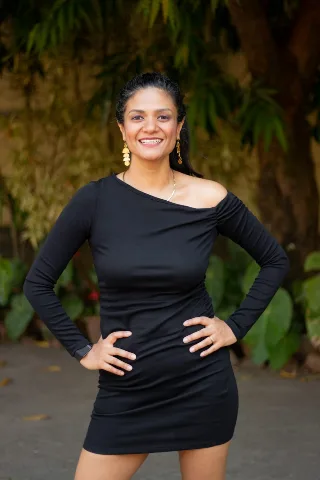
Aakanksha Singh Devi
She reads like she’s preparing for an apocalypse where books become currency. She writes the same way too – obsessively, analytically, occasionally at 2AM with seventeen tabs open and three contradictory thoughts fighting for survival. She watches F1 and football with an intensity that should probably be directed at something more productive. Like climbing mountains. Reads romance novels without apology. Once had a Bedouin propose to her in a desert in Jordan. She said no. Thinks about the sunset often.
Stay in the loop
New pieces, when they're ready.
No newsletters. Just a note when something worth reading goes live.